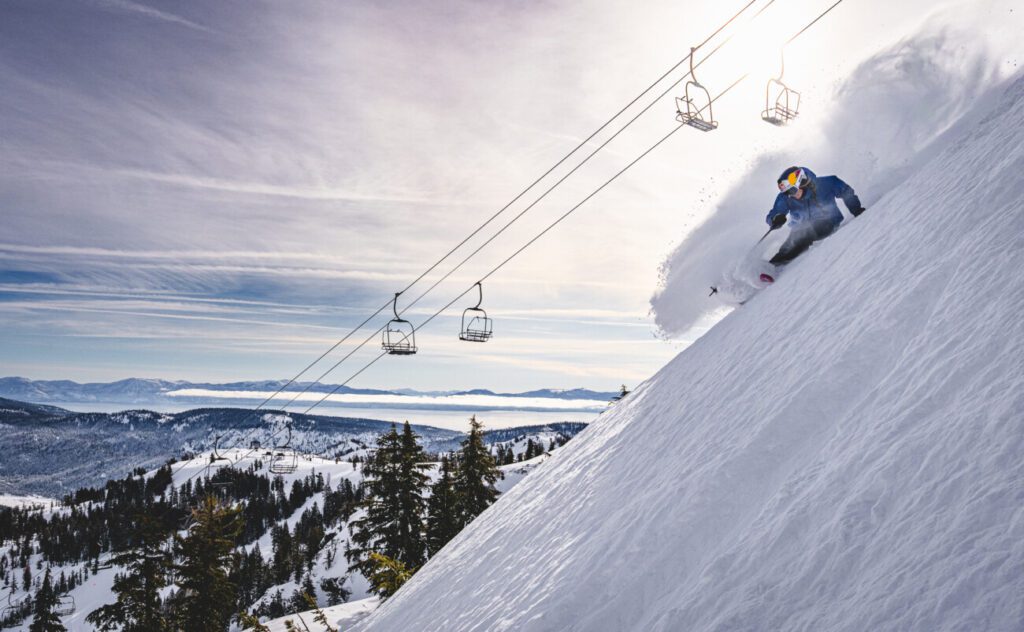
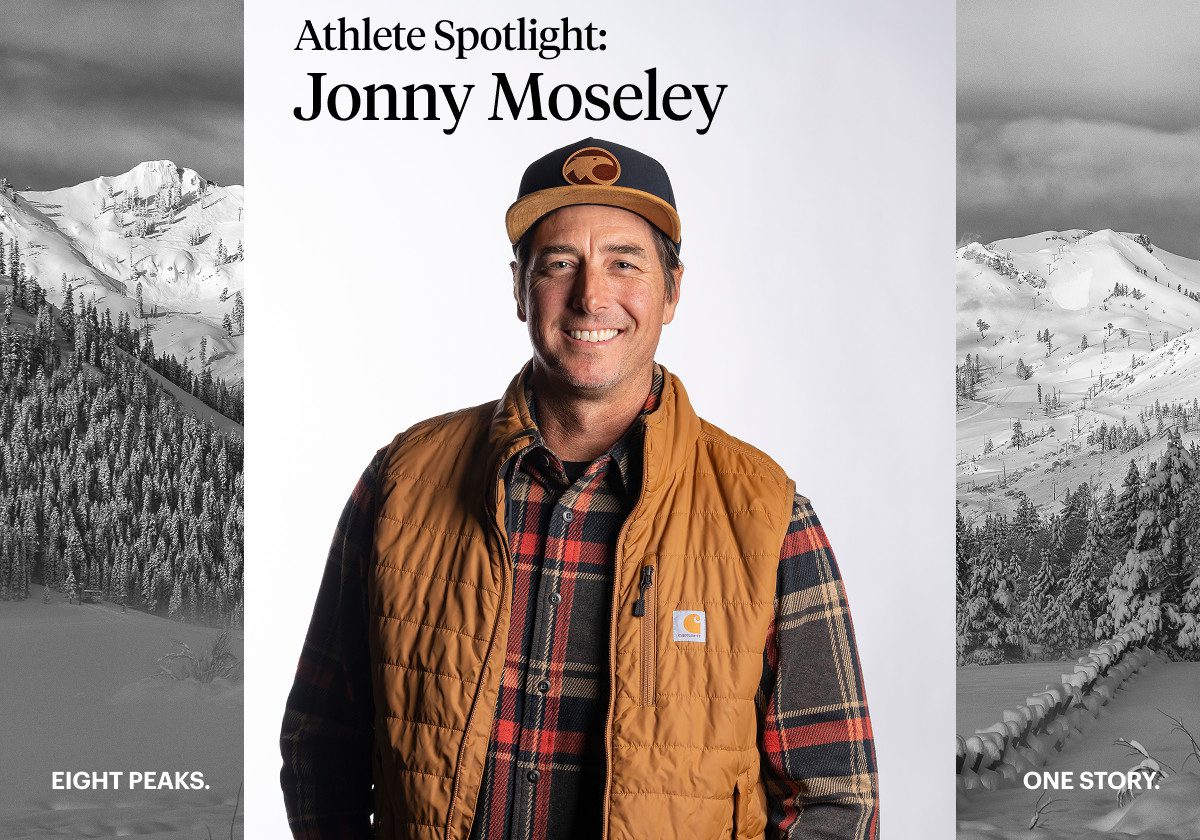
Jonny Moseley’s story begins with an investment: ski lessons from his father, who wanted his three sons to have proper technique. What followed was an Olympic gold medal, Hollywood success, a degree from UC Berkeley, and a lifetime connection to Palisades Tahoe.
His story perfectly encapsulates what makes Palisades Tahoe special: a mountain where legends are born, prepped on intense terrain, and nurtured by coaches who resemble professors at “a crazy old prestigious university.”
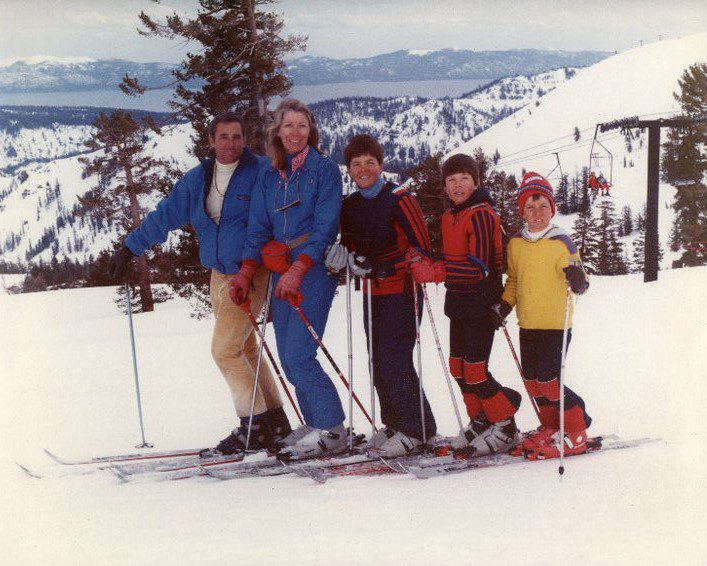
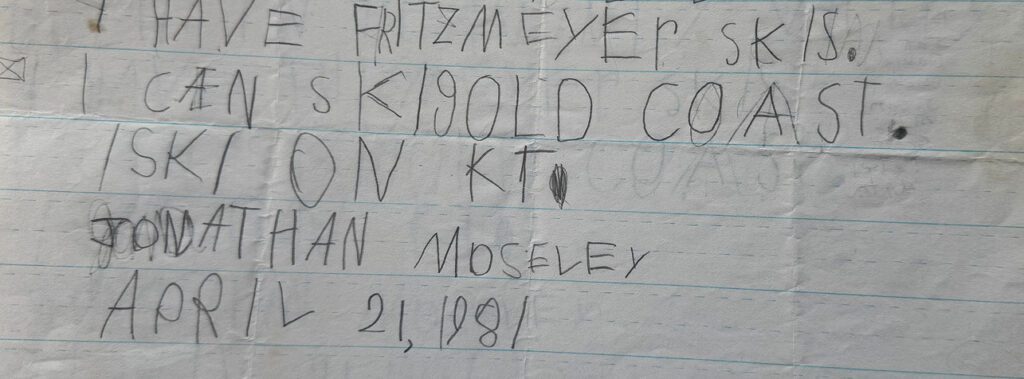
Jonny was born in Puerto Rico, but after relocating to California, his family was excited to reignite their passion for skiing and introduce their three boys to the sport. The Moseley family lived in the Bay Area and commuted up to Tahoe on weekends. Jonny put on skis at the young age of 3, and while he demonstrated a natural aptitude, no one could have imagined how he would redefine the ski industry.
Now in his late 40s, Jonny remains a charismatic ambassador whose career encompasses his technical success and vivacious personality. Discover how Jonny navigated early training, fame, television opportunities, and a ski business career, while staying connected to Palisades Tahoe. In the lead-up to the upcoming 2026 Winter Games in Cortina, we sat down with Jonny to revisit his journey and explore his current endeavors.
Learn more about Palisades Tahoe’s Pro Athlete team and stay tuned for holiday events with Jonny. Join him on the mountain or at après this season!
What does this mountain mean to you personally?
It’s incredible that my first instructor was still teaching on the mountain decades later when I came back after the Olympics, and even ten years after that when I was teaching my own kids to ski. That story is such a perfect summation of what Palisades Tahoe means to me. Pat Northrop was my first instructor when I was five, and she just retired in 2024 after 46 years. She was still out there teaching in Olympic Valley when I was back skiing with my own kids.
You look at Tahoe (where some people don’t even realize you can ski), and it’s produced all these incredible Olympic champions and professional skiers. It’s like a crazy old prestigious university. You’ve got these professors in the form of coaches and instructors who have been there forever and continue to churn out amazing students and athletes.
For me, that was Pat. She recognized that my brothers and I were precocious in skiing and advocated putting us into the programs. That’s how the chain of events started: Jeff and Rick went into Race, while I was placed in Mighty Mites.
How would you describe Palisades Tahoe culture?
You know, you’ve got this North Shore surfing analogy, right? It’s this crazy playground for the pros and this high level of skiing in all disciplines, yet there are easy access points for people who have never skied before.
The network of programming is unique. You can start your kid at four years old on a team in Shooting Stars. You don’t have to feel overwhelmed by a place that’s too advanced. The access points are very user-friendly, whether through instruction or the Mighty Mites program. And they’re not just run-of-the-mill beginner programs. You’re getting into a program with coaches who have been there for 30 years. As you go through the ranks, each level has these tenured people who have been teaching forever. You get to move through this system that has this cache of knowledge that’s very deep.
Are there two or three athletes or coaches who were instrumental in guiding your career?
My foundation is Kevin Whiteman, Raymond DeVre, Brad Holmes, and my brother, Rick. Whiteman was the overall godfather of freestyle at Palisades in its current form. And Raymond was my coach, counselor, mentor, and friend. Holmes was my ultimate inspiration. And I credit Rick as the technical guru and big brother who made it all possible.
Kevin Whiteman
Let me take you back to 1984, and freestyle skiing had this momentum behind it, like snowboarding had in the ’90s. Kevin Whiteman formed the first freestyle team—freestyle wasn’t in the Olympics yet, but everyone on the mountain was doing it. They had just filmed Hot Dog there, and Kevin was a World Cup freestyle skier who specialized in ski ballet.
He hosted these “King of the Mountain” mogul contests, where anyone could compete for five bucks. My oldest brother, Jeff, had this surf-skate ethos, loved punk music, skateboarding, skiing, saw freestyle happening, and said, “That’s what we want to do, Dad.” Kevin thought I was too young at eight years old, but my mom said, “If you’re taking those two, you’re taking this one too.” So, I joined the team and started skiing with the older kids. I was probably one of five kids in the Tahoe Basin that was doing freestyle.
Kevin taught me my first ballet moves, and for him, these were the fundamentals of freestyle. Then we’d change skis and do Daffy’s, Twisters, and Helis at the jump site. Finally, we’d go up and ski moguls.
Raymond DeVre
Raymond took me from a 10-year-old enthusiast to a 16-year-old serious mogul skier when I made the US Ski Team. His legacy is incredible. He produced Shannon Bahrke and me, two Olympic medalists in mogul skiing.
He was the perfect testament to the idea that if you’re on the hill for longer hours, you’re going to get better. But wanting to be on the hill longer isn’t a given; someone has to motivate you for every run, keep you stoked all the time. That was Raymond’s greatest strength.
Technically, he taught a basic, fundamental style: get over and stand on your downhill ski, hands forward. He had cues like “stab the bunny” for pole planting. You felt that Ray was on your side, always had your back, and basically thought you were the best guy in the world. He would break down mogul runs into basics, like landing a jump in steep terrain, which is the Holy Grail that separates good skiers from great ones. He’d build a jump in the steepest section and make us hike back up instead of riding the chair, so you got more reps and got stronger. I was working hard because I wanted to make him and myself proud.
Brad Holmes
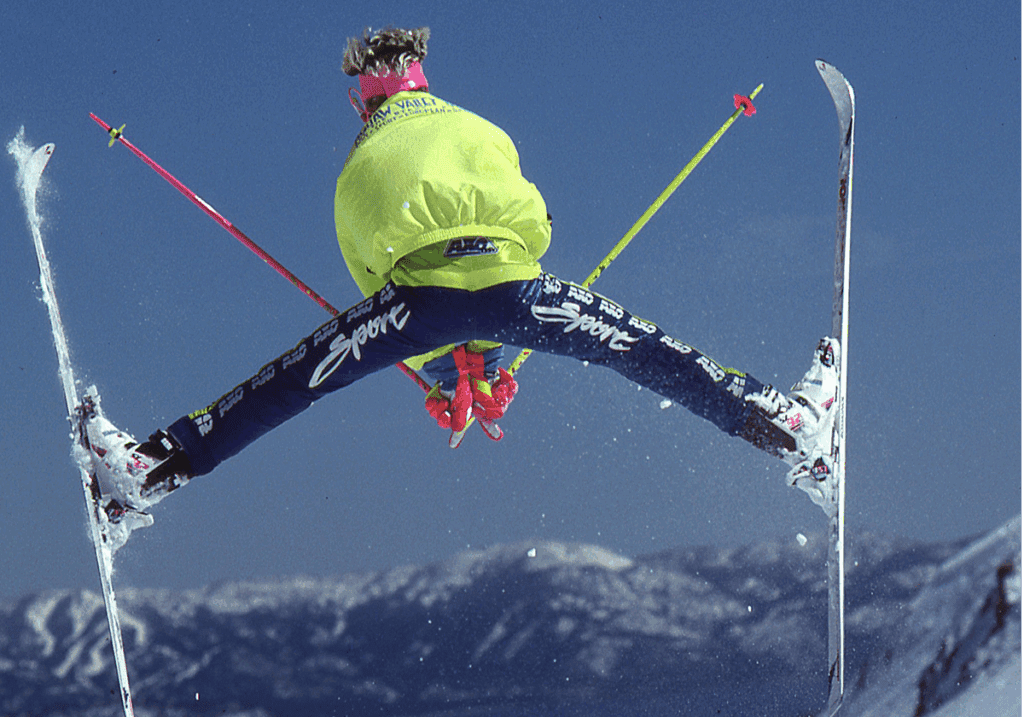
My ultimate inspiration was, without a doubt, Brad Holmes. When I was 12, he had made the World Cup as a mogul skier when he was 16 or 15 or something crazy like that. He’s still the youngest guy to ever make that team. And he was just Tahoe encapsulated. He wore motocross pants. He was an incredible athlete. He did ballet. He did air. He did bumps. He skied fast, but he was also super positive. He would get in the gate and give you props and pump up the young guys.
Rick Moseley
My brother Rick deserves so much credit. He was a better mogul skier, a better aerialist, and allowed me to hang out with all the older guys. He took me everywhere with him. He’d drive us to Hood and Utah to train in the off-season.
How did you start thinking about building your personal brand beyond just being a competitive skier?
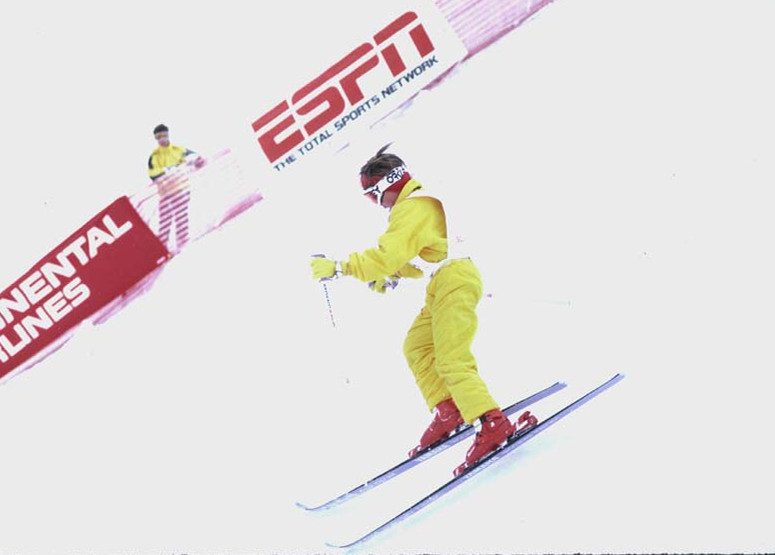
I started understanding the ski business when I was maybe 17, making money as a skier and soliciting sponsorship. It’s a bit of a symbiotic relationship or bargain with ski companies. They help you now; you’ll help them sell products later. I realized getting exposure was the keystone. As a mogul skier, we didn’t get much exposure compared to Alpine racers, and they might only be on TV twice a year with no social media.
I got interested in the TV side early. There was a syndicated ski magazine show called Snow Zone, and I figured out it was produced by a company in the Bay Area. I went in and pitched them: “If I send you videos from the World Cup tour from my little Hi-8 camera, will you show what we’re doing?” They agreed, so I started sending home videos from Europe, Japan, wherever we were competing. They’d dice it up, and Hank Kashiwa would start featuring my “Moseley’s files from the freestyle World Cup Tour” in Snow Zone. This was one of the first moments when I could lean into my personality outside of competing.
When I was getting started, it was quite difficult to find an agent. Luckily, I found one before my first Olympic Games, and it felt like a godsend. I was spending so much time hustling, and I had a file full of rejection letters. It was great having an agent to manage my sponsorships and business while I trained.
After his Olympic triumph in 1998, Jonny faced the unique challenge of what to do with newfound fame. Jonny describes this period of his life as “drinking out of a firehouse.” The options seemed limitless.
What was it like moving to LA after you won your gold medal in Nagano? How would you describe that phase in your life?
Right after the Olympics, I spent two or three weeks doing every media thing I could. And then I was like, ok, now I need to get back to World Cup training. I finished off the season and won the World Cup title. When it was over, I felt burnt out. My shoulder was hanging by a thread, and I didn’t want to compete anymore. I had started college at UC Davis out of high school, but ended up dropping out when my training picked up. At this phase, I wanted to move to LA, party, and go back to school.
I transferred to UCLA, got in the car with my buddy, drove down without knowing where I was living, and crashed at a friend’s house on the beach. I went through a period of wanting to be done and have a different life. And it was a nice life: surfing every day, partying at night, taking classes.
But I was partying too much. I remember a couple of friends telling me this indirectly and directly. It’s not easy to tell your friends when you think they’re screwing up, but I’m grateful I had those people in my life. I think a bit of internal self-awareness (and my friends) helped me realize I desired more, and that this was just the beginning. The sport was changing. Skiing would be in the X Games, and my sponsorships grew, affording me legitimate resources to make some important moves.
I also had a big wakeup call when I was in an airport and overheard a conversation about another skier and how they had squandered their gold medal. That really hit me. I didn’t want to be a cautionary tale. After a few months in LA, I packed up and moved back to Palisades. Now my goal was to create something bigger.
Candidly, I felt a little insecure about being pigeonholed as just a mogul skier. To me, I was thinking, no, I want to be the best skier in the world. So, I sort of started devising this multi-pronged strategy to build out my brand and legacy and to be known as one of the best pro skiers in the landscape.
I had leverage with the ski team now. I could do pro events that we weren’t allowed to do before. I was like, “What are you going to do, kick me off the team? Go for it.” They didn’t. I did X Games Big Air, US Open of Slopestyle, and created an event to show I was a good overall skier.
What was the Jonny Moseley Invitational?
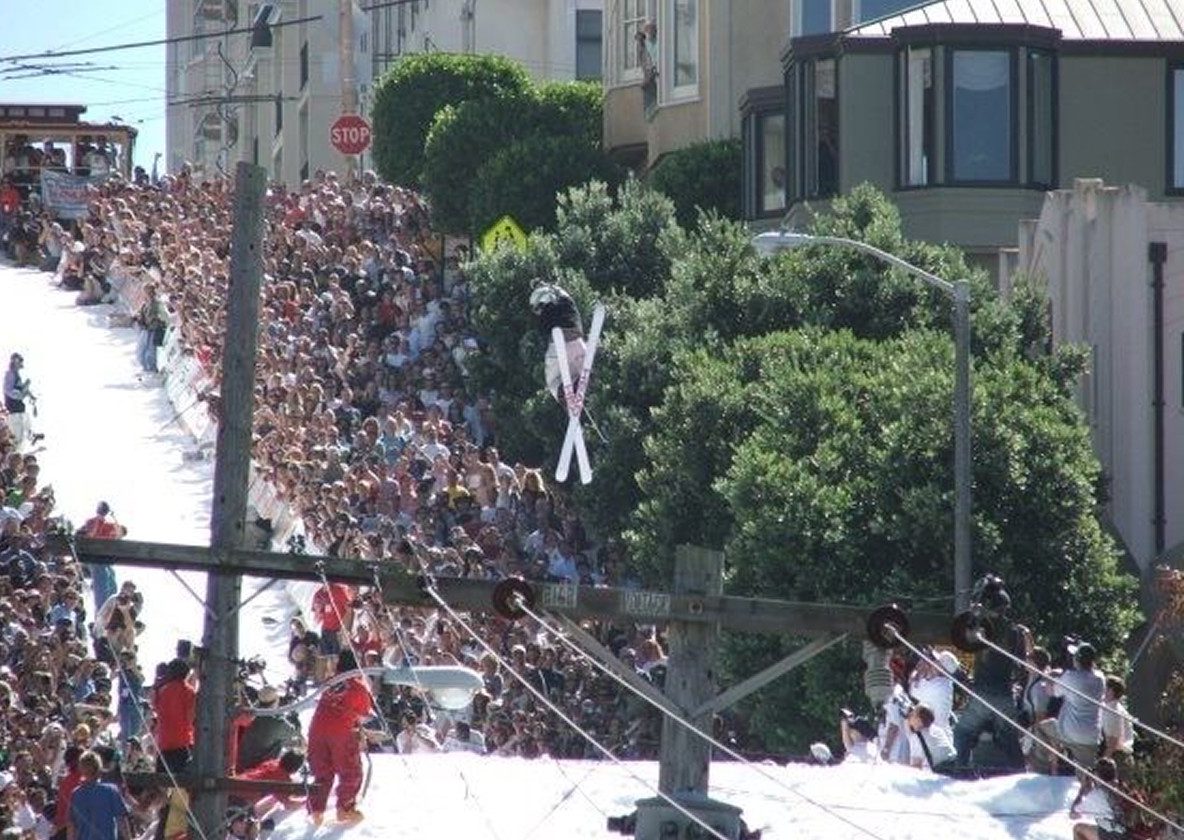
It was 16 of the world’s best skiers competing in both skier cross and slopestyle for a combined title. You had to be an overall great skier with tricks and racing. I pitched it to NBC and IMG, and they went for it.
The challenge was finding people who could do it. We brought in Shane McConkey, Kent Kreitler, JP Auclair, JF Cusson, Evan Dybvig, and Vincent Dorion, guys who could handle both disciplines. Evan won the first event hosted in Steamboat. Then, we had one at Palisades where Shane took the skier cross, I won the slopestyle, and the combined scores worked out in my favor.
The event was revolutionary because it forced this new conversation about what it meant to be a complete skier. It premiered on NBC and helped establish the credibility of what would become freeskiing.
What was it like developing the dinner roll trick and training for the 2002 Olympic Games?
The 360 mute grab in ’98 gave me that asymmetric advantage and helped shine a light on what was going on in skiing during that period. JP Auclair, mogul skier and pioneer of free skiing and park skiing, created the trick. I thought what JP, JF, and Vinnie were doing was amazing and started emulating them. The new school park scene was frothing, and I wanted to be part of it. The Snowboarders had reimagined what flipping could be. My teammate told me about JP or JF doing a misty flip (snowboard trick) on skis, and I thought it was impossible until I saw the video. It took me a minute to get my head around it because I was traditionally trained as an inverted aerialist. By that time, I had done triple twisting triple back flips (Full full full) on snow, so I had a very sophisticated air sense. I could pretty much throw tricks at will that I had seen even once on video or in person. One summer morning, I woke up in my bed and started visualizing a trick modeled after my favorite snowboard trick called a Rodeo. The take-off for this trick was an exercise in physics. They would carve their board in one direction while hurling themselves the opposite way, creating these incredible vectors that resulted in an almost flat rotation that looked so cool and unique. It reminded me of one of my favorite tricks on the trampoline called a toilet bowl, which was a difficult bed trick that took me forever to learn.
I was so excited to give it a try on the snow as I felt like I had it mastered in my mind. A week later, I was in Whistler and the wind lip was going off. I decided I was ready to try it. It was a disaster. I pounded myself, dislocating my already sensitive shoulder. I was used to it coming out and popping back in, so I was back in action a few days later, but this time I took it to the water ramps in Whistler. I figured it out and took it to the park to try. I was really excited to land it for the first time with Jonny Decesare filming. That winter, I rolled it out on the comp circuit. I took second at X Games Big Air, and the following winter, I added another half rotation to it and won the US Open Slopestyle. (It was originally a Dinner Roll 7, then I took it 900). At the time, nobody was doing this trick, which they now call a flat spin, and that is why Evan Raps and Shane Anderson encouraged me to name it one night after a session in Riviera Park at PT.
As the 2000 season came to a close, the 2002 Games started to creep back into my mind, and the idea that I might be able to throw this in the moguls was the catalyst for my comeback. I started making the calls to put this campaign together. First, I had to get back on the team. They offered me two US World Cup starts to prove myself. I had to get a podium, which I somehow managed to pull off. From there, I went to work trying to get the Dinner Roll approved by FIS. I knew there was a “no inverts” rule in bumps, and the dinner roll was right on the line.
One day at the end of May, Jimmy King let us go to the hill where my coach Cooper and I built a jump on a patch of snow under the Mainline pocket. I did the trick a bunch of times, and Coop took video from multiple angles in order to send it with the US Delegate to the spring FIS meeting in Switzerland to be examined and voted on. After seeing the video, they determined it was not inverted and it would be allowed. It was also given a degree of difficulty value. I was elated to have it approved.
My next task was to figure out how to do it in the moguls. I worked on it at a training camp in Chile in the Fall, but I couldn’t complete it. The torque from the unwind at the end of the flat spin was too much to deal with in the moguls. I’d get to my feet, but my tails would load up and I‘d get sprung. A solid concussion ended my attempts for that camp. As the winter rolled around, I had to abandon ship because I needed to podium in a World Cup to get a spot in the Games. I finally pulled that off and immediately left the World Cup tour to work on the Dinner Roll. During a session on a private course Steamboat built for me, I finally made the adjustment that allowed me to stick it every time. Essentially, I took the flatness out of it and started doing a corked 7. Two weeks later, I headed to the 2002 Olympics and did my run. People often criticize me for calling a cork 7 the Dinner Roll at the Games, and I understand, but the real truth is, I could not tell FIS or anyone that I changed the trick because a cork 7 was not in the rule book.
Anyway, I got fourth. The following year, they changed all the rules to allow inverts and made the dinner roll worth more points. One of the factors that hurt my score was that they assigned too low a point value to my trick. They made it worth the same as a quad twister, which is much easier and requires no set, allowing the guys who beat me to absorb the takeoff and gain valuable time points. In hindsight, I needed to understand the judging criteria better and translate to FIS the difficulty and value of what I was attempting to do. I hated losing and was not trying to be a martyr; I just mismanaged the process leading up to it.
Although Jonny successfully landed the “Dinner Roll,” he placed fourth overall. By landing this trick, Jonny cemented himself as a trailblazer skier and helped ignite the new wave of freeskiing. Outside of skiing, he started to succeed on the big screen as a narrator for Warren Miller and a television host.
How did you get involved in the TV industry?
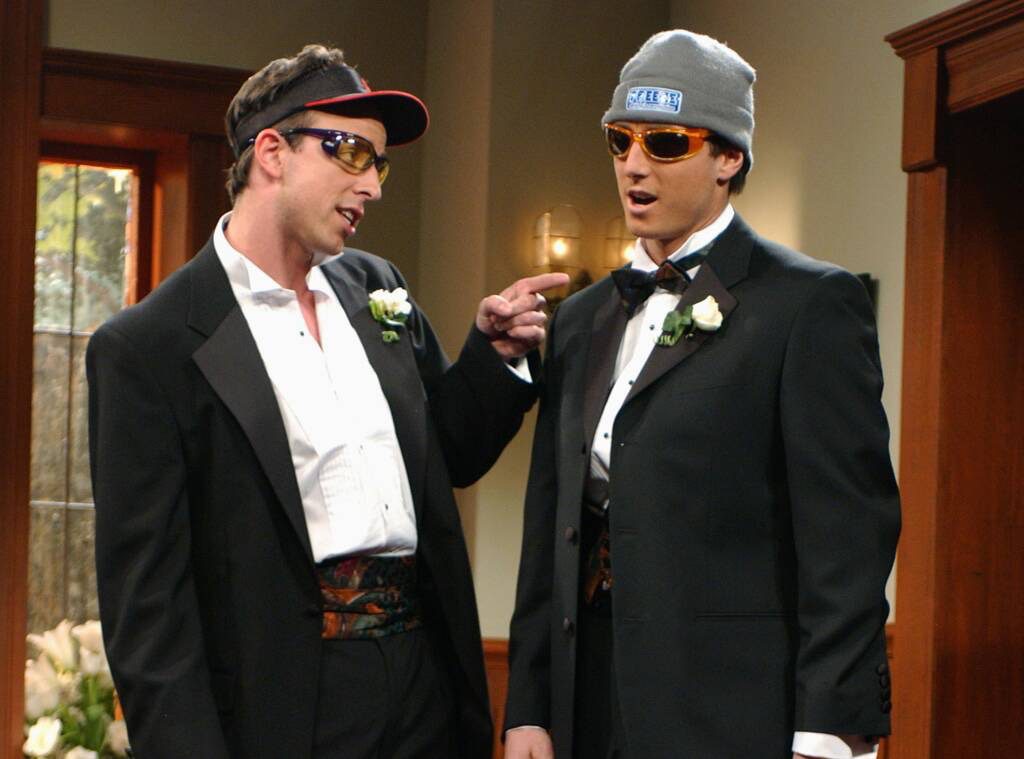
The 2002 Olympics were broadcast on NBC. Someone at NBC thought it was a good idea to cross-promote Saturday Night Live with the Olympics. It was planned out so that the closing ceremony of the Olympics coincided with the Saturday Night Live premiere. They wanted an Olympian to host, and I was selected. I guess at this point, I had done enough antics to reassure the producers that I could handle it. I missed the closing ceremony to fly straight to New York and had a week of prep before the show. Immediately after the show aired, MTV called me to audition for a show. It went well and they hired me to host MTV’s The Challenge. I think they liked my sports background. I was essentially a glorified referee. But anyway, that kind of launched me into the TV world.
You went back to school and got your degree from UC Berkeley. Why was finishing your education so important to you?
It was very personal. In the latter half of high school, I started gaining some love for academics. I liked the validation of getting good grades, but at that time, skiing was my top priority. I had this notion that I might like engineering like my brother, who was a mechanical engineer. I kept deferring school, and by 2002, I felt completely out of the academic world, but I still wanted to get it done. I was still enrolled in UCLA, so I planned to jump back into my classes there, but after hosting Saturday Night Live, I was asked to give the commencement address at Cal. I thought it would be more convenient to go to school there since I was living in Marin. I applied and transferred.
When you go back to school at 26 and everyone else is 18 or 19, you do feel old, but I loved it. I was still working for MTV and in the ski industry. I thought I might change careers completely to something like architecture, and I loved those classes, but I found a great professor who led me down an interdisciplinary path where I had the opportunity to study consumer and popular cultures.
You were and are so successful in branding yourself at a young age. How do you think social media has changed how young freestyle skiers approach the sport and brand themselves?
I mean, it was made for young pros. It’s incredible. I feel like it basically was the missing piece for us back when we were trying to compete in a world of sponsorship. If you weren’t designated marketable by an ad agency, you wouldn’t get any deals, right? That’s why the agent thing was so important, because the agent was technically your access point for these companies.
But now with social media, you just bypass everybody and let the people or consumers decide what is marketable and what is not. There are obviously some downsides to that. Since the entry barrier is so low, it can be hard to stand out. And the scary side of social media is how it can incentivize risk-taking for views and likes. Aside from the risk, it’s an incredible tool, and now being unique is the challenge.
In the 24-25 season, Jonny showed off his ski ballet skills, much to the delight of viewers. This video racked up almost a million views, making it the top-viewed video of the season.
That is hilarious. In no case should that be the most viewed video. But it goes hand in hand with how being unique is the challenging thing. And I suppose ski ballet was an out-of-the-box video for many people.
Do you foresee any revolutionary technologies that will progress the sport of skiing in the next 10 years?
I think we are probably due for a design breakthrough, like rocker or parabolic skis. I’m not sure what it will be. AI reserves the right to disrupt all industries known and unknown! In the near term, it’s sure to change travel, passes, weather prediction, and skier and industry behavior.
Your career has evolved in so many interesting ways over the last 20-30 years. What has been your secret to overcoming hurdles and adapting to changes in the industry?
I was in the right place at the right time a few times. I’ll give myself some credit for being interested and willing to learn new things. I think this allowed me to move with the sport as it changed and transition to fields that could complement my skills and brand.

Are there any new opportunities or career goals for the future?
My kids are starting to take flight, which is a mix of great and sad. However, I feel like I’m getting close to entering a phase in life where I could pursue something with more of a singular focus. I realize, now, what a luxury it is to be able to dig in and work on a single goal or focus every day. I try to tell my kids and others to take advantage of that time.