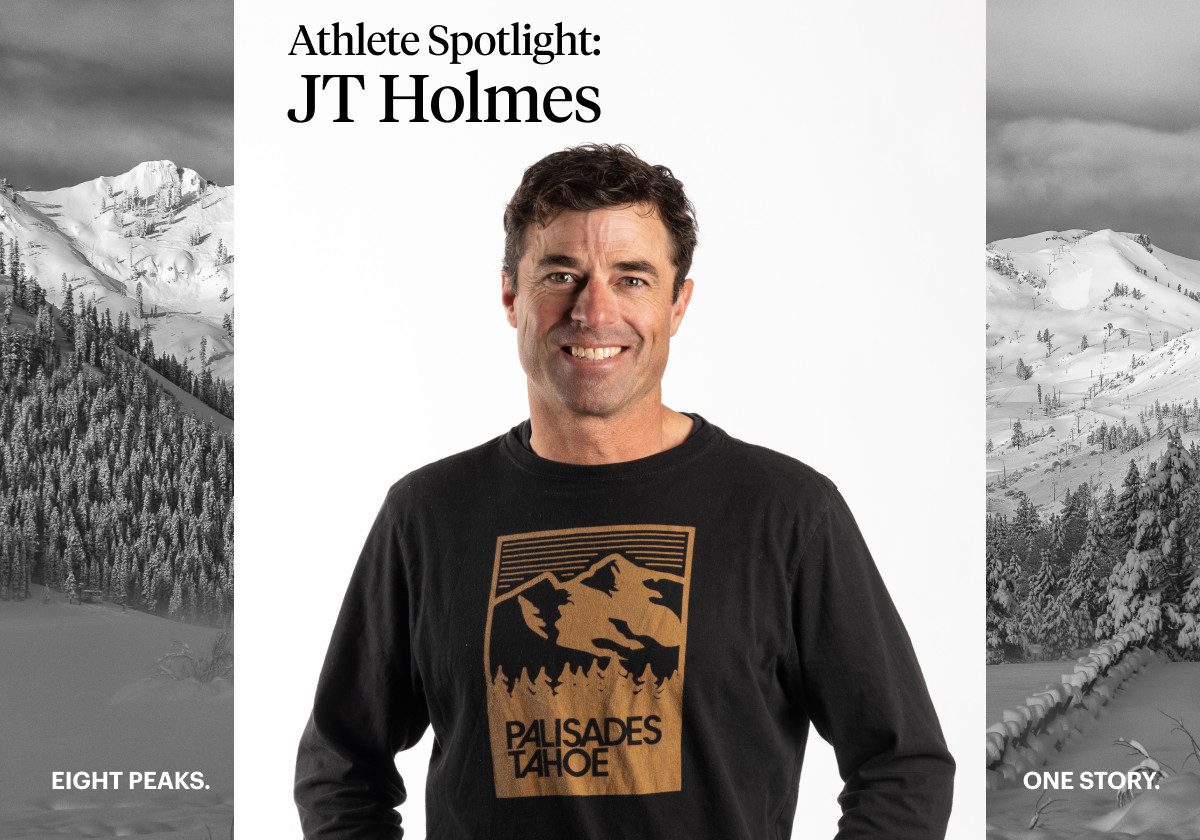
For nearly three decades, JT Holmes has been redefining what’s possible on skis and what happens after you leave the snow behind. From his earliest days on the Palisades Tahoe freestyle team to becoming one of the world’s most recognized names in big-mountain skiing and base jumping, Holmes has built a career on the kind of fearless progression that makes you question the laws of physics. With appearances in over 30 ski films, two features on 60 Minutes, and stunt work on multiple blockbuster movies, he’s become a legend not just in the ski world, but in the broader realm of action sports.
But beneath the death-defying descents and wingsuit flights lies a deeper story: one rooted in the terrain, community, and culture of Palisades Tahoe. This is where JT learned to ski. Where he honed his craft. And where he continues to push boundaries while inspiring the next generation of athletes who look up at those same peaks and wonder, “What if?” We sat down with JT to talk about his roots, his evolution as an athlete, and what it means to call Olympic Valley home.
When was the first time you ever came to Olympic Valley? How old were you and what was the experience like?
I don’t remember the very first time I came to Olympic Valley because I was too young, but I do have some really early memories. My first pass was from the 1982–83 season, so I would have been about two years old at the time.
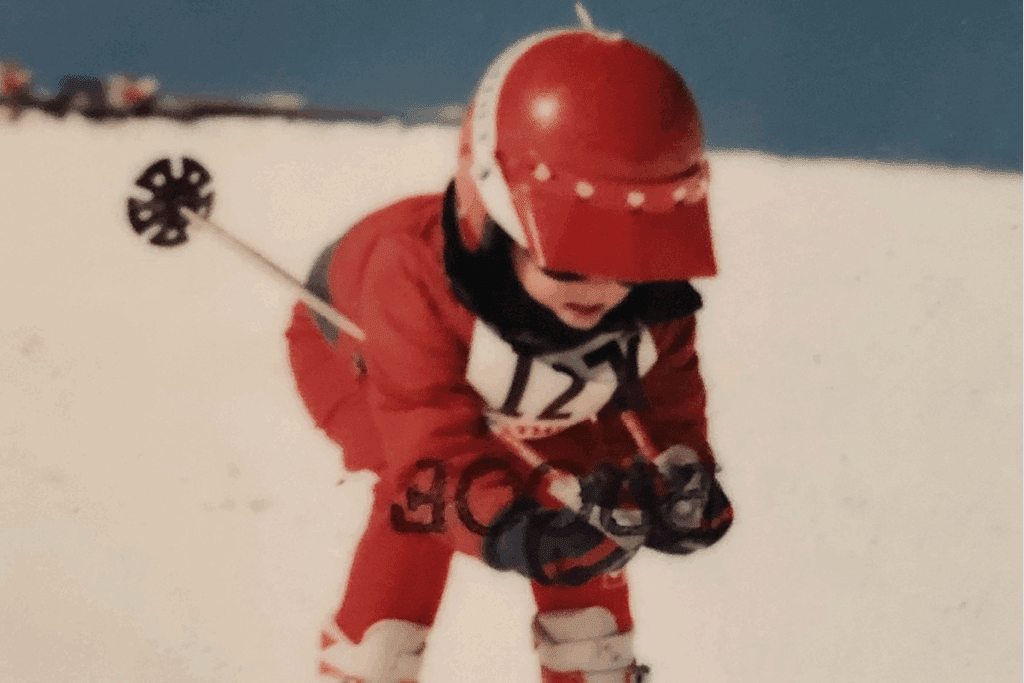
My earliest memories are from a kids’ ski program near the Wa She Shu Chairlift. There’s a small house there, not the blue one, but the one on the left as you’re heading up, between Mountain Run and the lift. We had little skis with Velcro on the bottom and a small carpet laid out so we could waddle up and slide back down. It was mostly a daycare setup, but I actually remember those moments as a little kid.
After that, I have lots of great memories from my days as a Mighty Mite.
What was your childhood development path as a skier? Did you go through the Teams programs at Palisades?
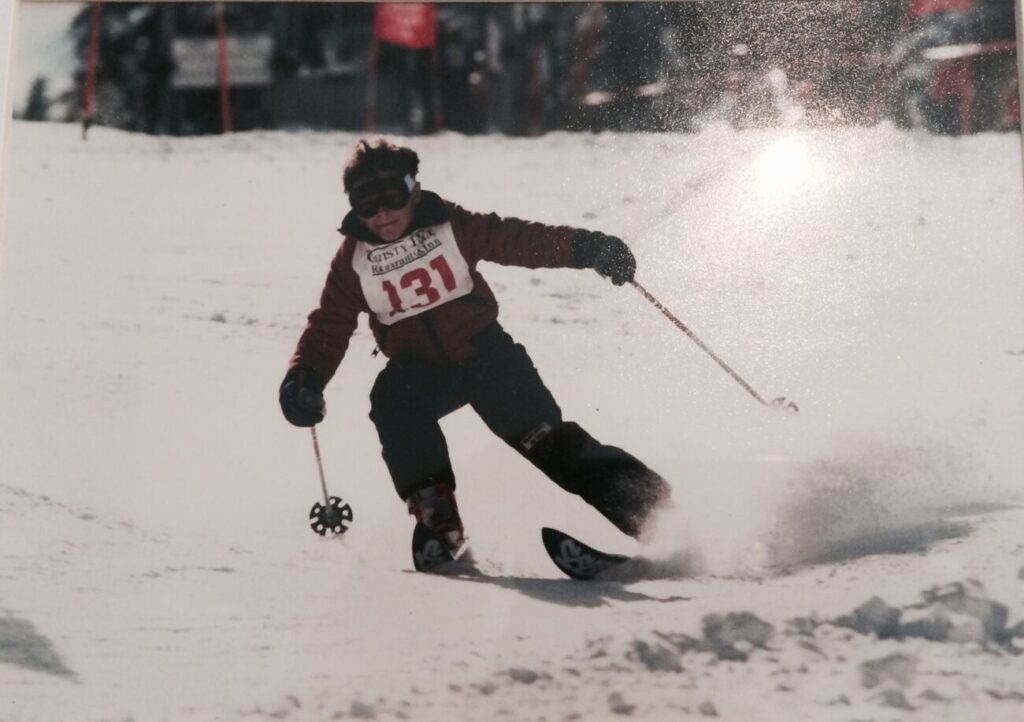
I started out in the kids’ ski programs and then moved into Mighty Mites. From there, I dabbled a bit in racing, but this was the late 80s and early 90s, and freestyle skiing still had that “hot dog” vibe. To me, freestyle was the place to be.
One of my dad’s close friends, Raymond DeVry, was the coach of the freestyle team, so I ended up joining as a mogul skier. Honestly, it wasn’t just about the moguls for me. I wanted to be part of a team, part of a program. That gave my skiing some legitimacy. When you live in the Bay Area and ski every weekend, it can just look like you’re going on fancy vacations. But when you’re in a program, it’s like being in soccer or football; people understand that it’s serious training and competition.
Being on the team brought structure and consistency to my skiing. The only issue was that I wasn’t the best mogul skier. I’d usually finish fourth or fifth, but that was in an incredibly competitive age group. The guys ahead of me were consistently top ten at Nationals, so it was tough competition.
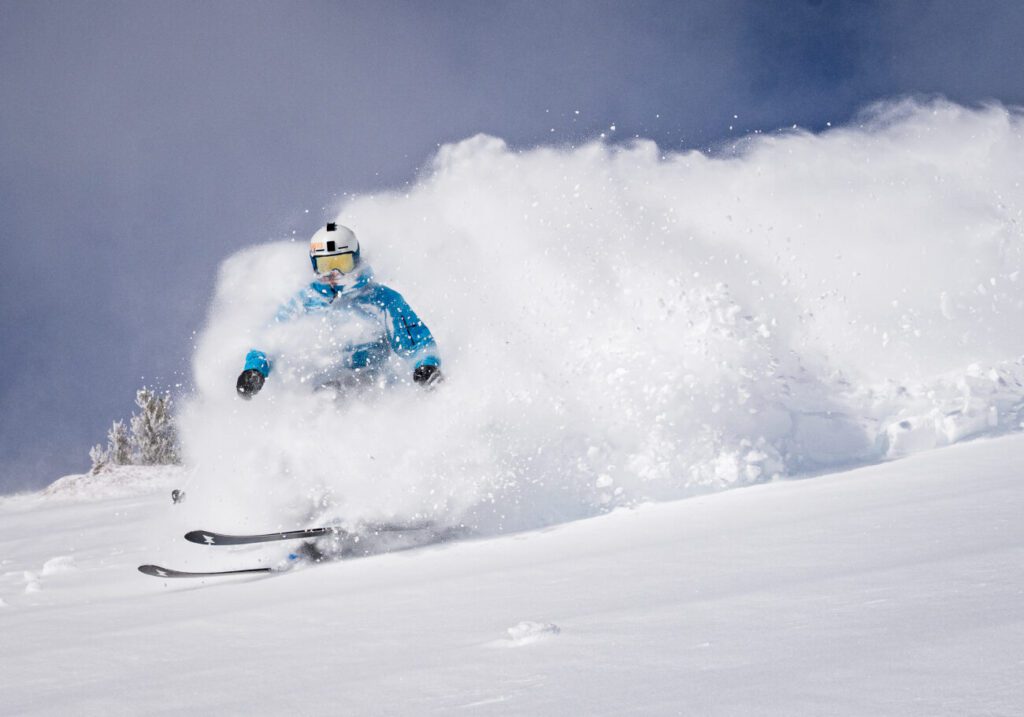
Before long, I gravitated toward what we called “extreme skiing” at the time, which evolved into freeskiing. It was all about finding steep lines, jumping off anything you could, going fast, and having fun all over the mountain. That’s really what shaped my path toward becoming a competitive and professional skier.
The freestyle team days were also when I first started traveling for skiing competitions. We’d go as far as Sun Valley for mogul events, and that was a big deal for me as a kid.
Did you play other sports as a kid?
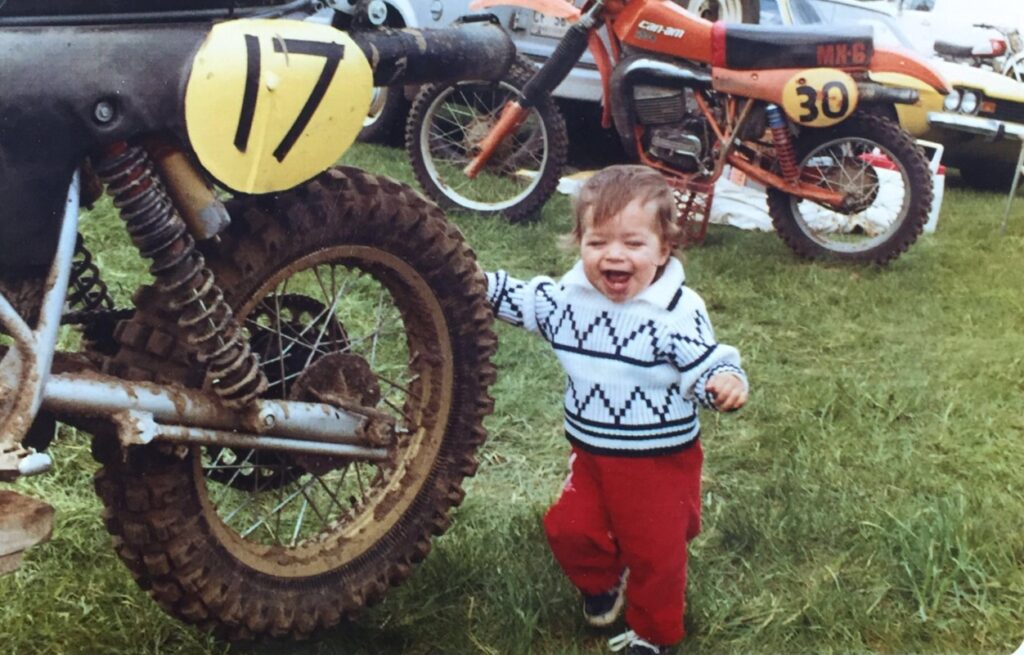
I did play other sports, but I had bad allergies as a kid, so the field sports weren’t really my thing. I’d be out in right field sneezing my head off, which wasn’t much fun.
Water, on the other hand, was great. I played water polo and swam, and that gave me some of the best fitness I’ve ever had. It was awesome you get really strong, and it builds incredible endurance. To this day, I still have a foundation of comfort, strength, and technique in the water that I’m really grateful for. It’s cool having that kind of training to fall back on.
I was pretty decent at it, but I realized early on that I could really hang on skis. If we played basketball after school, it was fun for an hour or two, and then we were done. But skiing was something I could do all day without ever getting bored. I just wanted more and more of it. That’s what set skiing apart for me and there was definitely a bit of ego and confidence that came with it too. It felt good to be one of the better athletes instead of somewhere in the middle.
What was the turning point that made you want to move out to Olympic Valley/Tahoe?
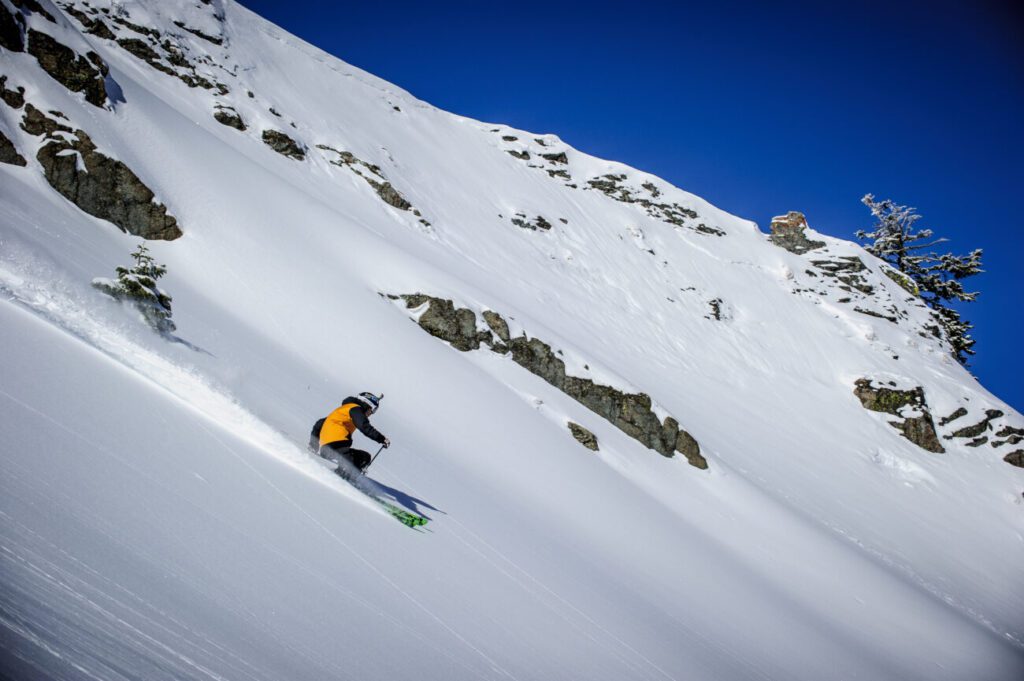
I remember a few moments as a kid that really set me on a path, but one of the clearest was realizing just how much skiing every day matters. We were weekend skiers coming up from the Bay Area, and I had a friend, Peter, who came up to ski with us. He hadn’t skied before, but he was a great athlete. Soon after, he enrolled in a boarding school here in Olympic Valley and started skiing every day.
Six weeks later, I skied with him again and realized he was now better than me. He was doing tricks and going bigger than I was. That’s when I understood: if you want to get good, you have to ski every day. I begged my parents and they agreed to send me to the boarding school.
That school was a perfect environment for me. The teachers cared, the class sizes were small, and skiing was taken seriously as a sport. We skied all five mid-week days, plus weekends, so seven days a week. Some of the teachers I had there are still great friends today. I went for a year and a half, my grades improved, and I ended up graduating high school a year early because it was going to be too expensive to stay for my senior year. That experience really set me on the path toward becoming a pro skier.
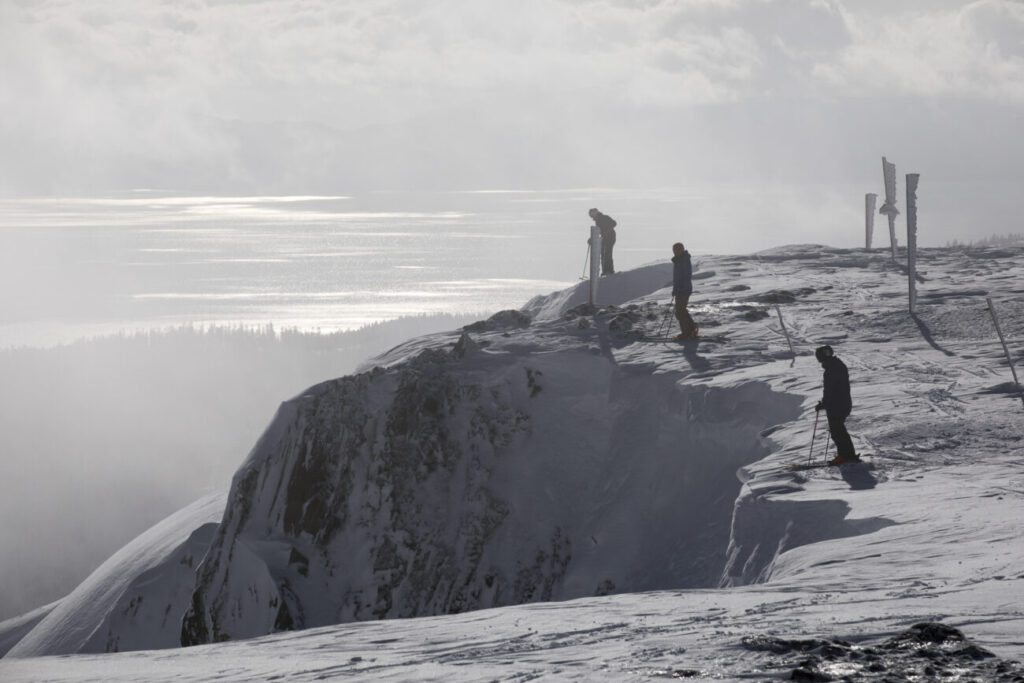
Another defining moment was skiing with Shane McConkey and Jeff McKittrick when I was about 14 or 15. Seeing them living their lives as pro skiers made it click for me. I realized that this was what I wanted to do. I started reaching out to photographers and pros, leaving messages offering to help on shoots, and eventually I got my first opportunities. By the time I was 15, I had even been in a Warren Miller movie. That was when I knew I was off to the races and that skiing was going to be my career.
Do you have any mentors or coaches that were particularly influential in helping you succeed in becoming a professional skier?
Definitely Shane McConkey and Jeff Engerbretson. Cameron Boyle also helped me get my start when he recommended me to Warren Miller the first time.
Jeff was always around KT in the afternoons, and I was too. He would just talk to me about technique, not in a formal lesson way, but by sharing what he was thinking while skiing. Back then, there weren’t programs for steep skiing or big mountain technique. You either did freestyle skiing or racing, or maybe a lesson on groomers, but nobody was teaching how to ski steep lines, land cliffs, or carve in varied snow. Jeff shared all of that with me. He explained things like angulation, forward pressure, and different ways to carve a ski. He was just nerding out about skiing, and I learned a lot from him.
Palisades Tahoe still has that culture. You might spend an afternoon following someone like Alan Riley or Tom Day, and you can learn from them. Most people are welcoming and happy to answer any questions on a chairlift. Those conversations are part of what makes skiing so special. That’s why I try to leave my phone at home when I go skiing because you never know who you might meet or what kind of experience you’ll have. My friend Timmy Dutton used to do that a lot, and I’ve tried to make it a habit myself.
How old were you when you turned pro, signed your 1st contract, & who was it with?
I was skiing one afternoon on KT-22, still the old chairlift, so this would’ve been around 1995. I had just come straight from class, still wearing a collared shirt, tie, and sweater.
I was on Volant Chubbs, kind of fat skis, and it was one of those classic spring days when it’s raining one minute and sunny the next. I was just skiing fast, blowing off steam, by myself. I remember skiing the Fingers, right under the chair, in that wet, heavy snow, and those skis were working great.
Afterwards, I hitchhiked back to the dorms, skis in the back of this guy’s pickup. When he dropped me off, he asked, “Hey man, what’s your deal for skis?” I said, “I’ve got these, another pair, some mogul skis,” totally missing what he meant. Then he handed me his business card and said, “Call me on Monday.”
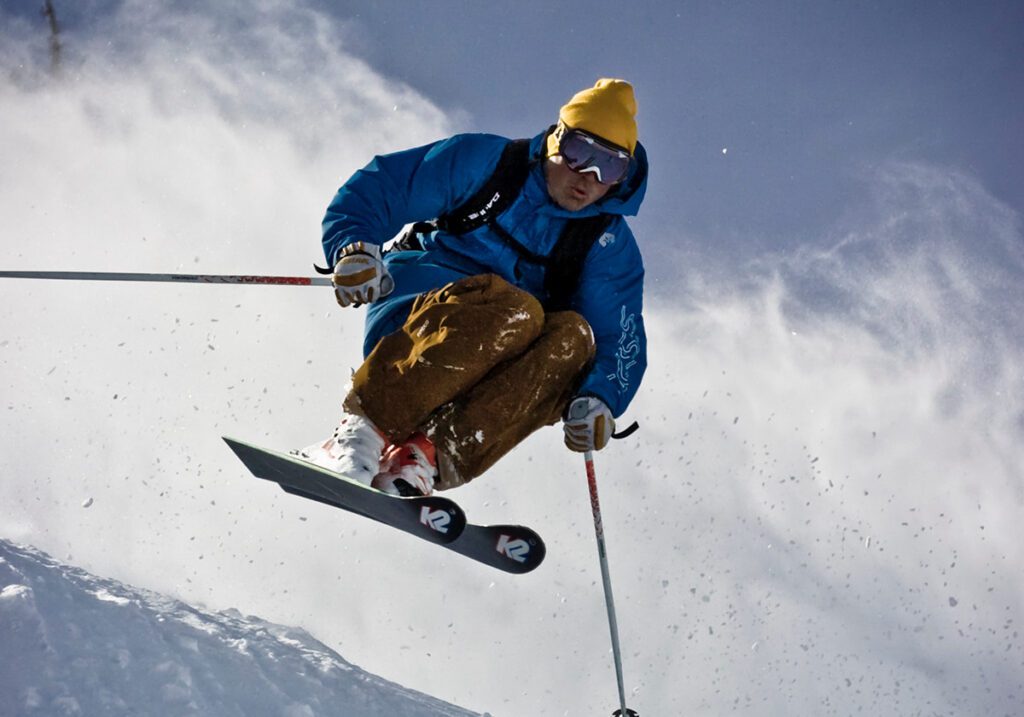
I looked at the card, and it said K2 Skis. The next week, I had boxes of gear: stickers, sweatshirts, hats, skis, more skis than I even had bindings for. It was a dream come true.
Within a year or two, those guys were flying me to Alaska to film with Matchstick Productions. I don’t even remember if they paid me much, if at all, but they made it happen. They were like, “We’ve got this kid. He needs to go to Alaska.” So they bought me a plane ticket.
I was 17 years old, hanging out with the crew, watching them drink beer and play pool, just taking it all in. It was an incredible experience, and that was really when it all began.
What enticed you to compete in Freeride competitions & what was the competitive experience like for you?
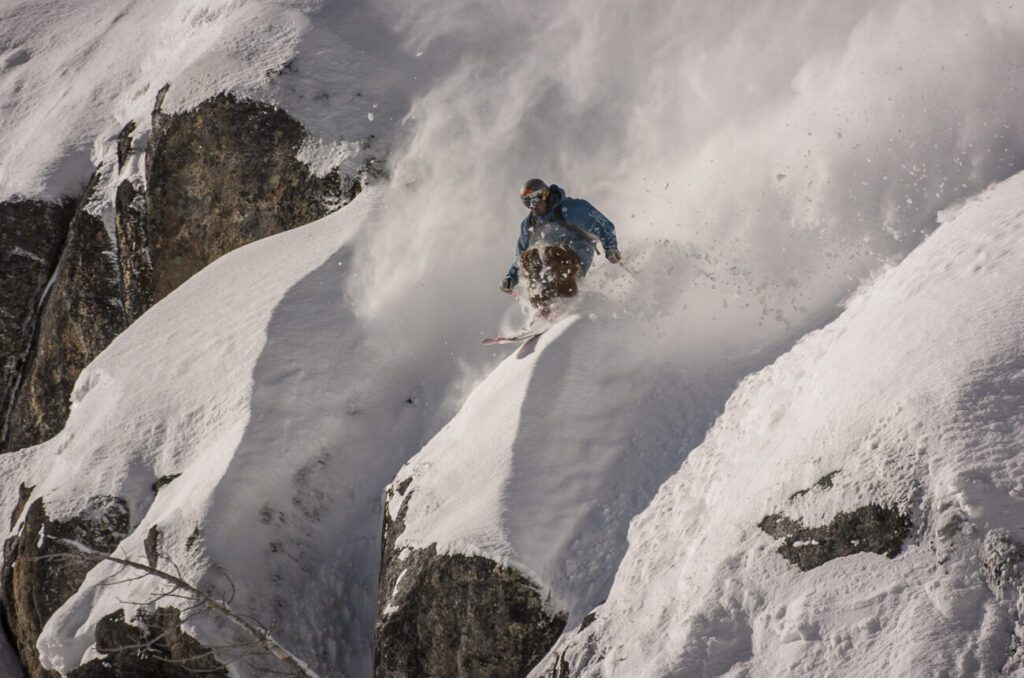
The thing about big mountain competitions is that they’re a great way to push yourself as a skier. In these events, you’re going to put down the strongest run you possibly can on that specific venue, on that specific day. The course gets torn up by other competitors, so you’re often skiing in rough conditions, maybe in the shade or on uneven snow. But that challenge makes you better.
Then, when you go film later in perfect conditions with sunshine and fresh powder, it feels easy by comparison. Making ski movies felt like a breeze after competing against a field of hungry young skiers willing to risk everything for a shot at the podium. The big mountain scene was intense.
Back in the late 90s, I was looking for a new opportunity because I wasn’t performing as well in freestyle skiing. I started entering big mountain comps, hoping to sneak onto a podium, and before long, I actually did. I began landing podium finishes alongside athletes who were much older than me, and that helped me get noticed.
I competed from around 1998 until maybe 2004 or 2005, basically until I discovered parachuting and shifted my focus to filming. Filming was more fun and honestly a better way to make a living as a skier. But around 2009 or 2010, I decided to return to competition through the Freeride World Tour.
I went back because I wanted to win. I had never actually won a ski event. Maybe when I was a kid I won a small mogul contest when most of the top competitors were away, but I had never really stood on top of the podium. So I came back with that goal in mind. I placed second, third, fourth, and fifth, but never first.
That determination led to one of the worst wipeouts in Freeride World Tour history. It was my final year competing, and I just wanted to win one event. That was my white whale. I didn’t care about playing it safe or earning points for a season title.
Every run, I was going all in. I wasn’t choosing lines that would get me second or third. I went for the lines that could win, and I took some huge crashes because of it. In one fall, I went down from high on a steep face and just kept tumbling. It’s amazing how much time you have to think when you’re falling like that. I remember trying different ways to control the tumble, even wishing I could pull my jacket off my head so I could see.
I tried to deploy my airbag, but the forces kept my arms extended, and I couldn’t reach it. I learned that relaxing worked better than tensing up. I fell for quite a while, but I knew where I was on the mountain and that there weren’t rocks directly below me. It was still a no-fall zone, but I got lucky and came out okay.
When I finally stopped, I gave the “I’m okay” wave. Then I looked up and saw my ski about a thousand feet above me. I started wondering how I was going to get it back. But this was Switzerland, and with Swiss precision, there was no time wasted. Suddenly, out of nowhere, a guy appeared hanging from a helicopter line. He swooped down, clipped me into a harness, and just like that, we were off the mountain.
The whole thing took maybe four minutes from the moment I stopped to when I was safely back at the ski patrol shack. It was incredible to see that level of efficiency and precision in action.
What was your favorite film project to be part of & why?
Oh man, that’s a tough one. The last time I counted, which was years ago, I had been in more than three dozen ski films. Honestly, my favorite ones tend to be the most recent because they’re fresh in my mind. But over the years, a few really stand out.
As a professional or sponsored athlete, you go through highs and lows. Some years are great, others not so much. You might lose a sponsor when you least expect it, or pick one up out of nowhere. You might even get a raise during an injury year, and then get cut when you’re on the cover of magazines or winning contests.
There was one year when I thought it would be my last as a pro skier. I figured the wave had peaked and it was time to move on, maybe become a firefighter or something more stable. I didn’t have much money, and Matchstick Productions had told me they weren’t going to film with me that year. They wanted to focus on a small group of top athletes with major sponsors, so I wasn’t part of the plan.
But I didn’t let that stop me. I just skied my heart out that season. Then, as luck would have it, Seth Morrison got busy, Shane got injured, and things shifted. Suddenly, Matchstick needed to fill some space in their movie. They reached out and said, “Hey, how would you feel about going out with Jeff Engerbretson to film in the Tahoe backcountry?” I told them, “I’m your guy. Let’s do it.”
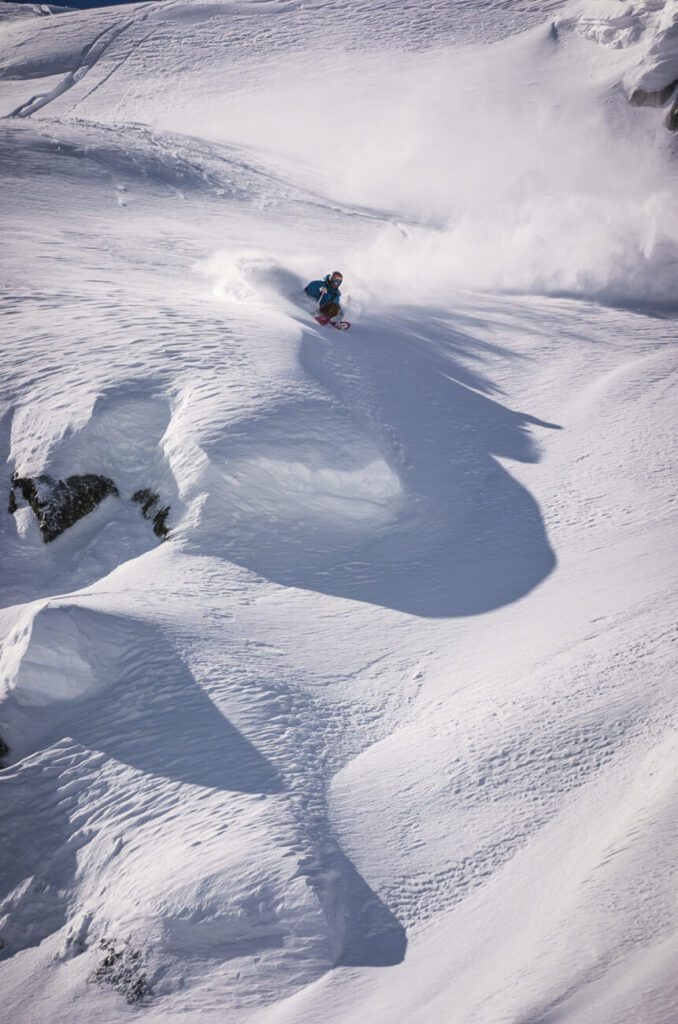
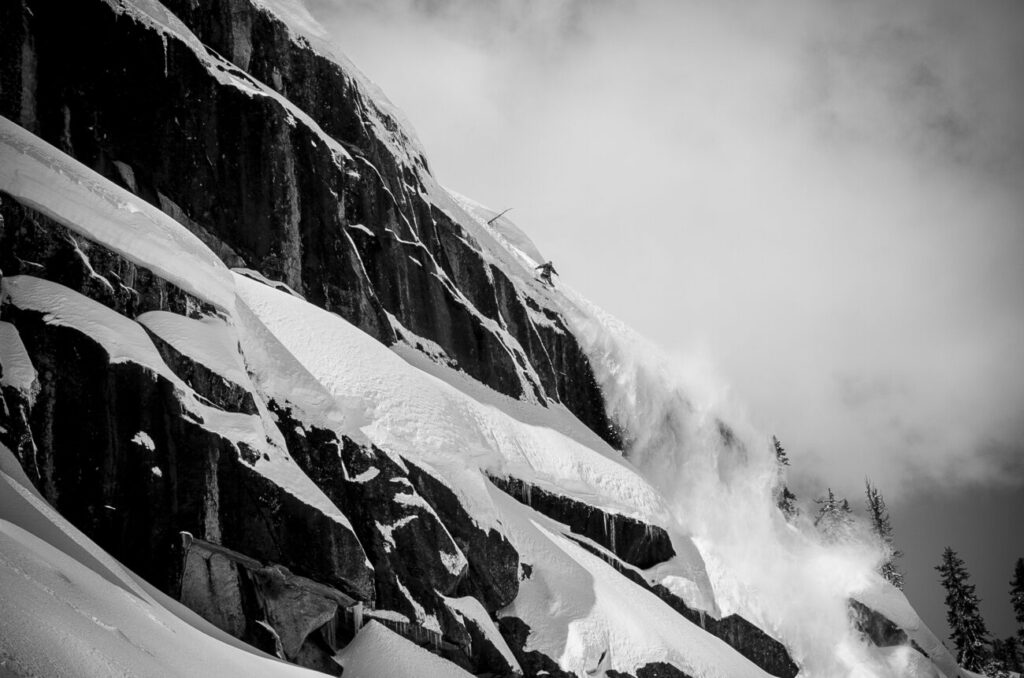
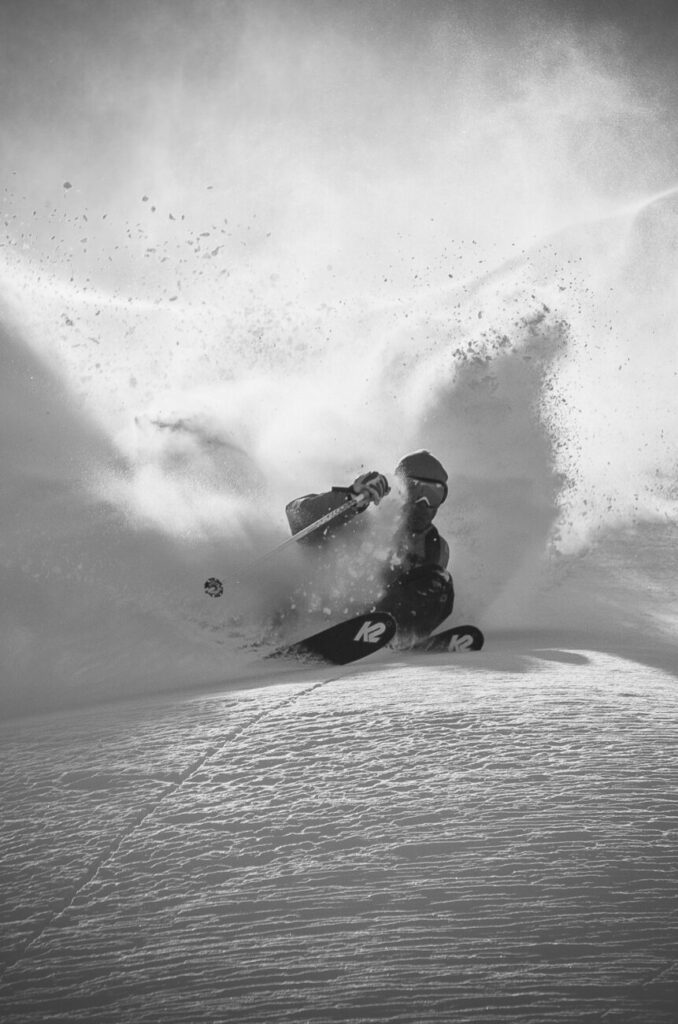
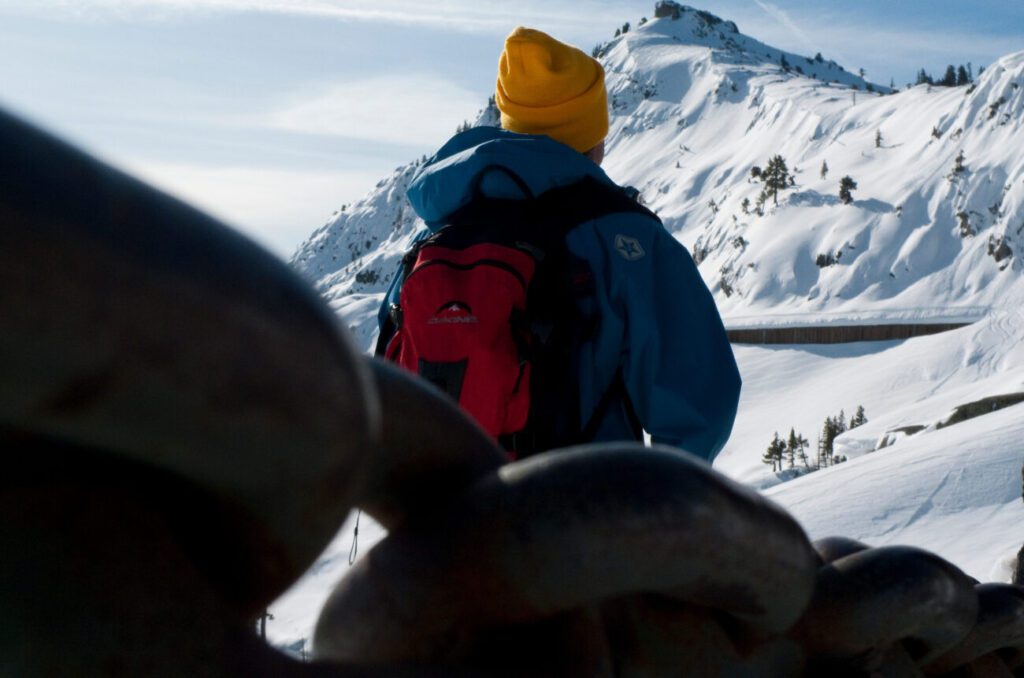
We filmed all around the Tahoe backcountry, hitting all the classic spots, and ended up creating a great little segment with a small budget. It was pure fun, and that project really stands out for me.
Another unforgettable experience was filming with Warren Miller at Palisades. I had a day in Silverado where they actually let me use my parachute, and it was one of those rare bluebird powder days. We were speed riding with lift access at Silverado, and it felt surreal. Everything lined up perfectly the snow, the light, the crew, the timing.
Making a ski movie takes a lot of things coming together. You need the right weather, the right snow, the right terrain, the right camera team, and of course, the athlete has to be ready to perform. If one piece of that puzzle doesn’t work say someone forgets to charge a camera battery or a safety concern shuts down the line, you’re done for the day. But when everything clicks, it’s magic.
Some of those Warren Miller shoots at Palisades were exactly that. Everyone knew what to do, where to be, and it all flowed. And sometimes, we’d bring in young athletes getting their first shot. Watching those kids step up, stomp their lines, and match the level of the pros was amazing.
When did you start sky diving & BASE jumping?
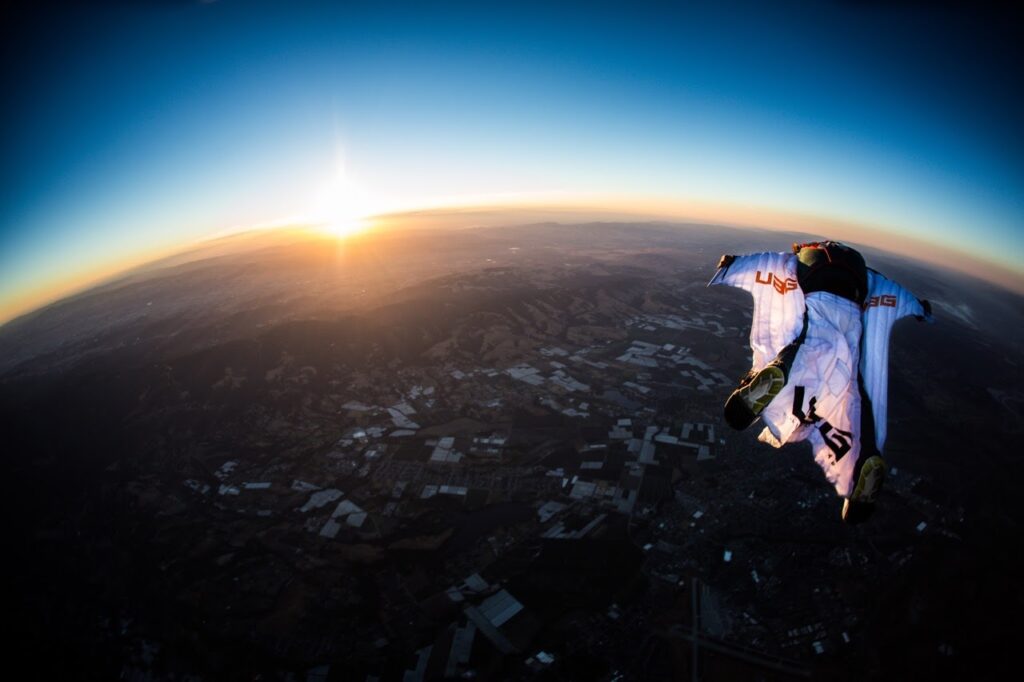
Shane McConkey got me into it by taking me base jumping one weekend. That experience was eye-opening because I realized how accessible airborne sports really are.
I actually went base jumping before I ever went skydiving. I learned both sports at the same time, but I did about four base jumps with Shane that first weekend, then started mixing in a little skydiving. For my first hundred jumps, I had twice as many base jumps as skydives. I was literally jumping off cliffs before I even finished the seven-jump skydiving course.
A lot of people think Shane taught me how to base jump, but he didn’t. He was the one who introduced me to it, but I actually learned from a guy named Jimmy Freeman, a talented Australian who charged me twenty bucks per pack job. We’d jump off bridges together, and that’s how I really learned.
The truth is, all those aerial sports (wingsuiting, paragliding, base jumping, skydiving) are actually pretty simple. They don’t require a ton of athletic skill or complicated training. As long as you make sure your parachute lines are untangled and deploy with some symmetry, whether you’re falling through the sky or running off a mountain, it’s very straightforward.
That first weekend with Shane showed me how approachable it all was, and from there, I just kept doing it.
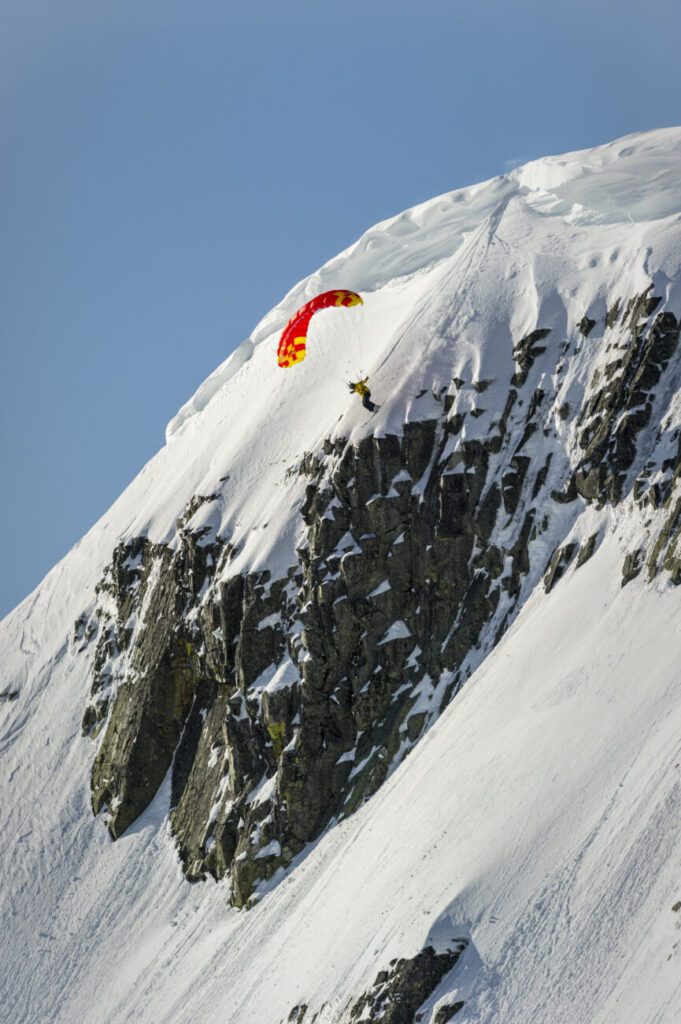
How & when did that evolve into speed riding?
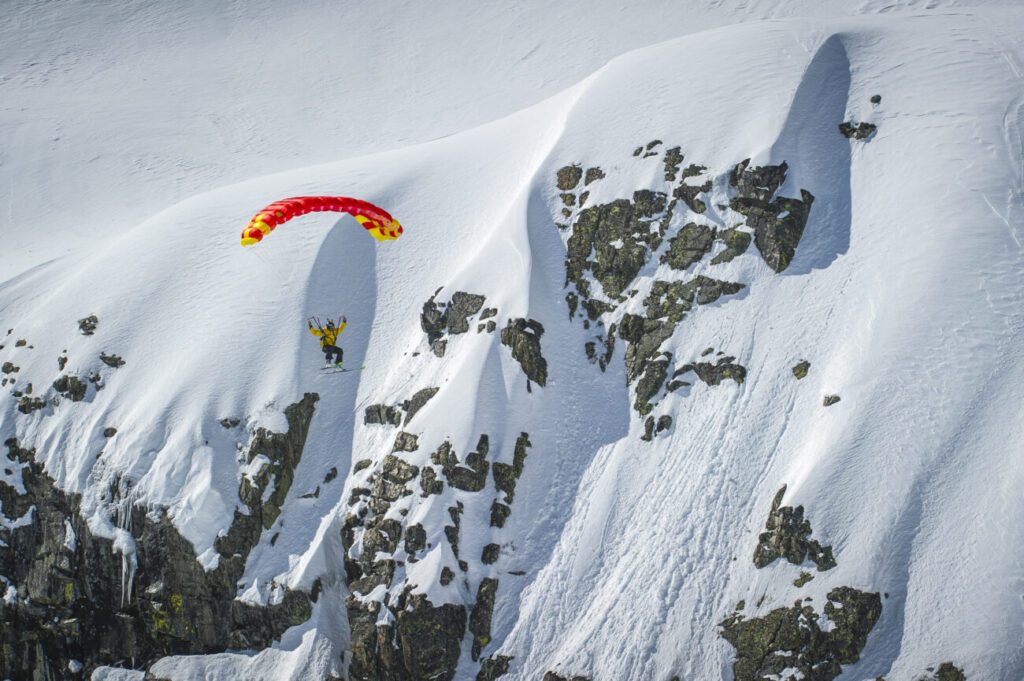
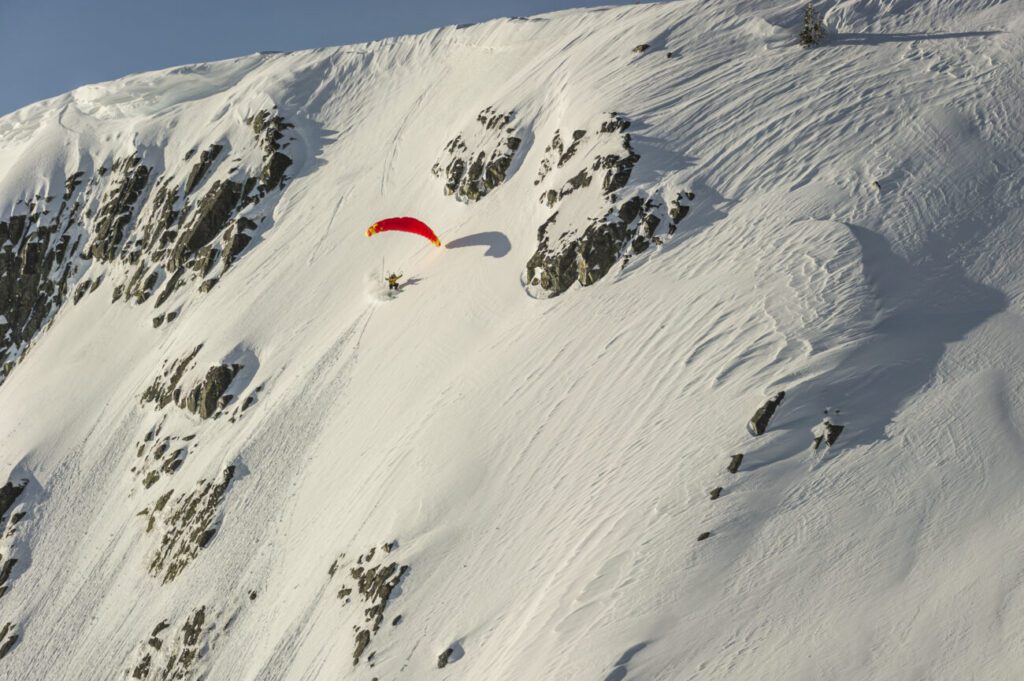
I started speed riding around 2010. People had been experimenting with it probably since the early 2000s, maybe even earlier. There have been folks combining skis and parachutes for a long time. I mean, someone even went off Everest with skis and a paraglider back in the 80s, not from the summit, but still.
It’s hard to pinpoint exactly when speed riding truly began, but I don’t think it was until around 2005 or 2006 that you could actually buy a wing designed specifically for it.
After Shane passed away, I started thinking about how to combine skiing and flying in a way that felt smarter and safer. Speed riding seemed like the natural evolution of that idea. There was a guy named Antoine Montant who really inspired me. He was skiing with a parachute on these steep, incredible faces and leaving perfect tracks. Watching him made me want to learn how to do it.
I remember a defining moment when I was skiing in Chamonix in late spring. That time of year is amazing because the wet snow sticks to the steep slopes. I had just done two runs off the Aiguille du Midi, both of the classic lines, the Glacier Rond and the Couloir Cosmique. Each one ends with a long traverse under the true North Face of the Aiguille du Midi.
While I was down there, I saw these guys speed riding above me. I had just skied sun-softened, slushy snow, and they were floating through untouched powder, leaving clouds of snow behind them. I’d finished my two runs for the morning and was exhausted, sitting at the mid-station chugging water and Coke in the spring heat, while these guys were casually smoking cigarettes and sipping génépi, that herbal French liqueur, like it was nothing.
They were just lapping perfect powder lines in May because their parachutes let them ride right off the ends of massive cliffs no one else could ski. That’s when I knew I had to learn how to do it. It was just too incredible not to.
Was the Eiger descent your greatest accomplishment as a professional athlete?
The run I did down the Eiger was definitely the most extreme thing I’ve ever done in my athletic career. It was the most dangerous thing I ever planned to do. There have been other close calls where I was near death, but those weren’t intentional. In those cases, I had probably just bitten off more than I could chew. But with the Eiger, it was a very deliberate and aggressive plan.
That all came together in 2004. Shane and I went off the Eiger and did ski-base jumps. If you go back and look at that footage, it’s in a Matchstick Productions film called Yearbook. There’s an iconic shot of Shane doing a double front flip off the Eiger. It was incredible. What really stands out for me is how small Shane looks and how massive the mountain is. I did a front flip, he did a double, and we were both thrilled with it.
We started halfway down the mountain. There were about 3,000 vertical feet above us that we didn’t even touch. We were just two small figures on this huge face, playing with our little parachutes. We opened our parachutes right away, so we only used about 1,000 feet of a 6,000-foot face.
Once I learned how to speed ride, I started thinking about how you could actually go from the very top of the Eiger. By that point, I had also figured out how to disconnect my skis midair and transition into a base jump. That’s when the light bulb went off. You could start from the top, speed ride, land and ski, then launch off the North Face, do a few flips, release your skis, and keep free falling for another 20 seconds. I did it.
As for how it turned into a 60 Minutes segment, I had done a piece with them in 2009 about flying wingsuits and stayed in touch with the producer, Tom Anderson. I told him about what I was planning, and he said, “If you end up doing that run, let us know. Maybe we’ll come film it.”
For a couple of years, it just did not come together. I wasn’t ready, or the mountain wasn’t in the right condition. Then Anderson Cooper got involved. He really believed in the story and told us, “Just give us 48 hours’ notice, and we’ll show up.” And they did.
Since they are news, not a film crew, they could not plan around it the way you would for a ski movie. They had to respond to what was actually happening. Anderson understood that the mountain would dictate the timing. When the window opened, everything aligned perfectly.
After we wrapped up the last interview, we both headed to the airport. I had been in Switzerland for six weeks, maybe longer, and we were both ready to get home. My flight was leaving in less than an hour, his maybe in an hour and twenty. Usually when you travel with a celebrity, everything revolves around them. Not with Anderson.
He had the driver drop me off first, carried my ski gear inside, helped me check in, and even made that little video. That is when I realized what kind of person he really is. He is grounded, genuine, and just an all-around solid human being.
When did you become a stunt coordinator & how did you get started in Hollywood?
The first time I was on 60 Minutes was in 2009 for wingsuit flying, and Michael Bay saw that. Michael Bay is a director who makes big action movies, and he was just like, “I gotta have this guy in Transformers 3 flying wingsuits.”
He called me. His people reached out, and I flew down to LA to start breaking down an action scene. I coordinated an award-winning sequence that involved base jumping off skyscrapers in Chicago, wingsuit flying from the skyscrapers, and jumping out of helicopters with wingsuits while flying through the city. That really put me on the map and won a Taurus World Stunt Award.
It also got me into the Screen Actors Guild. I immediately went to stunt driving school because of my background in off-road racing in Baja and started getting driving jobs. Then I started working in stunts full-time.
Working in stunts is fun. Not every job is like Transformers 3, with big budgets and special access. A lot of stunt work is good blue-collar days, making sure people are safe, rigging equipment, or performing controlled falls and fight sequences. You may not be doing something memorable or award-winning, but it is solid work. You also get health insurance, which is nice.
Stunt coordinating is different from what people expect. It is adulting: Excel spreadsheets, planning, budgeting, negotiating. I like that side too because I am kind of a nerd, and I enjoy organizing and problem-solving.
What’s the best thing about being a dad? How old is your daughter Sloan now & what makes Tahoe such a wonderful place to raise children?
I don’t even know how to pick because it’s all great. Even the stuff that kind of sucks is actually pretty fun. Changing a diaper? Kind of funny. Sometimes you get a little frustrated when they don’t stop crying, but that’s what babies do. Then they smile, and it makes you feel incredible. They just bring so much joy to life. I’m a big fan of being a dad.
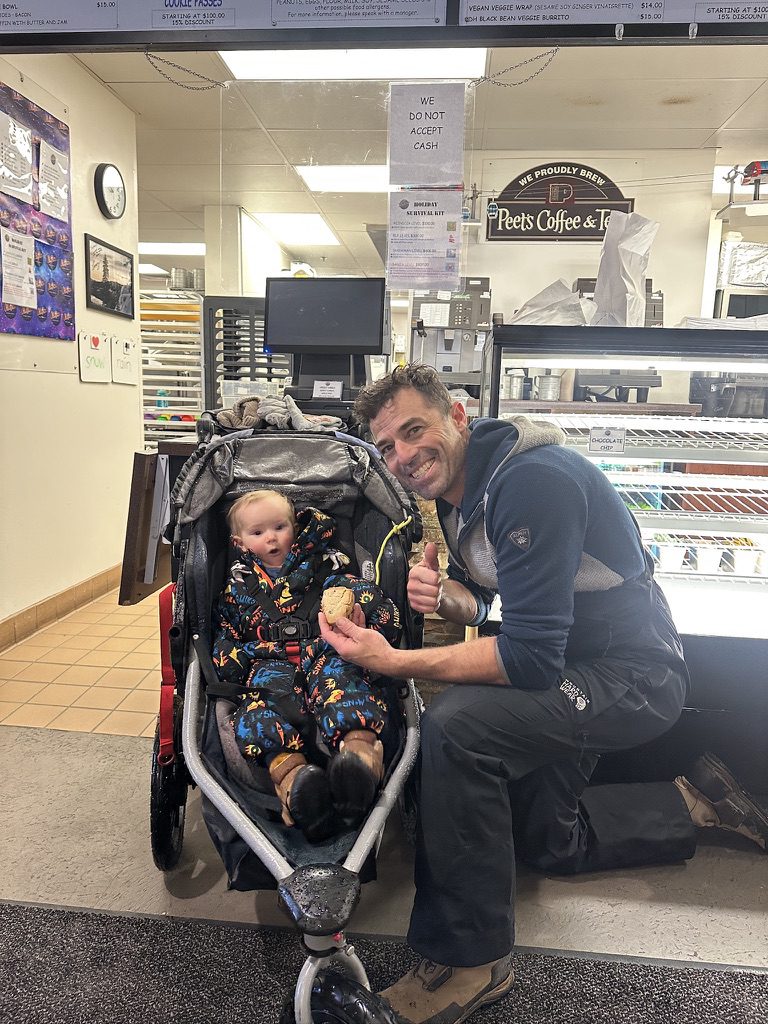
It’s especially fun here because we’re surrounded by so much nature. Sloan loves to hike. She’s not even two years old yet, but once she learned to walk, we basically stopped using the stroller. She just loves walking. We go out all the time through the valley, and when it rains, we go puddle stomping. It’s the best. We’ll head to the meadow, the golf course, or a parking lot anywhere with puddles and splash around.
As far as getting her on skis, the plan is to get her on the hill before she turns two. Her birthday’s December 11th, so she’ll definitely be on snow this year.
Do you have any exciting projects coming up that you’re preparing for?
I’m preparing for winter. It’s starting to feel like fall around Olympic Valley. The mornings and evenings are getting colder, and there’s more precipitation. Winter’s coming, and that’s what I’m getting ready for.
How do you like to spend your time during the summer months?
This summer, I’ve been working, doing a bit of the dad life, flying off mountains, and just enjoying it all. We had a really special Tahoe summer with perfect weather. It never got too hot, and we were lucky not to have any wildfire smoke, thankfully.
I’ve been spending a lot of time outdoors. There’s a hill behind my house called Poulsen Peak that I love to hike or run up, and then I fly off it with a speedwing or small paraglider, landing down in the meadow. I also mountain bike, ride dirt bikes with my dad when he’s in town, and I love water skiing.
There’s not really one main summer passion for me right now since I like to mix it up. I’ve also been doing some skydiving. I just take whatever the conditions give me. If it’s windy, I’ll go paragliding over in Kings Beach; if it’s calm, that’s perfect for water skiing on glassy water. Around here, the conditions are almost always good for something.
From the Palisades Tahoe freestyle team to the cutting edge of ski base jumping, JT Holmes’ journey is a testament to what happens when love for the mountains meets an appetite for progression. His story isn’t just about the cliffs he’s skied or the gaps he’s jumped. It’s about the deep connection between an athlete and the place that shaped him. Palisades Tahoe didn’t just provide JT with terrain; it gave him a foundation.
As he continues to inspire through film, competition, and mentorship, JT remains living proof of Palisades Tahoe’s legacy of producing world-class athletes who don’t just chase adrenaline. They redefine what’s humanly possible. Because when you’re raised on a mountain that demands everything from you, you learn to give it right back.
That’s not just skiing. That’s love.
Learn more about Palisades Tahoe’s Pro Athlete team and discover the other legends who call this mountain home.
Check out our other Athlete Spotlight blogs.