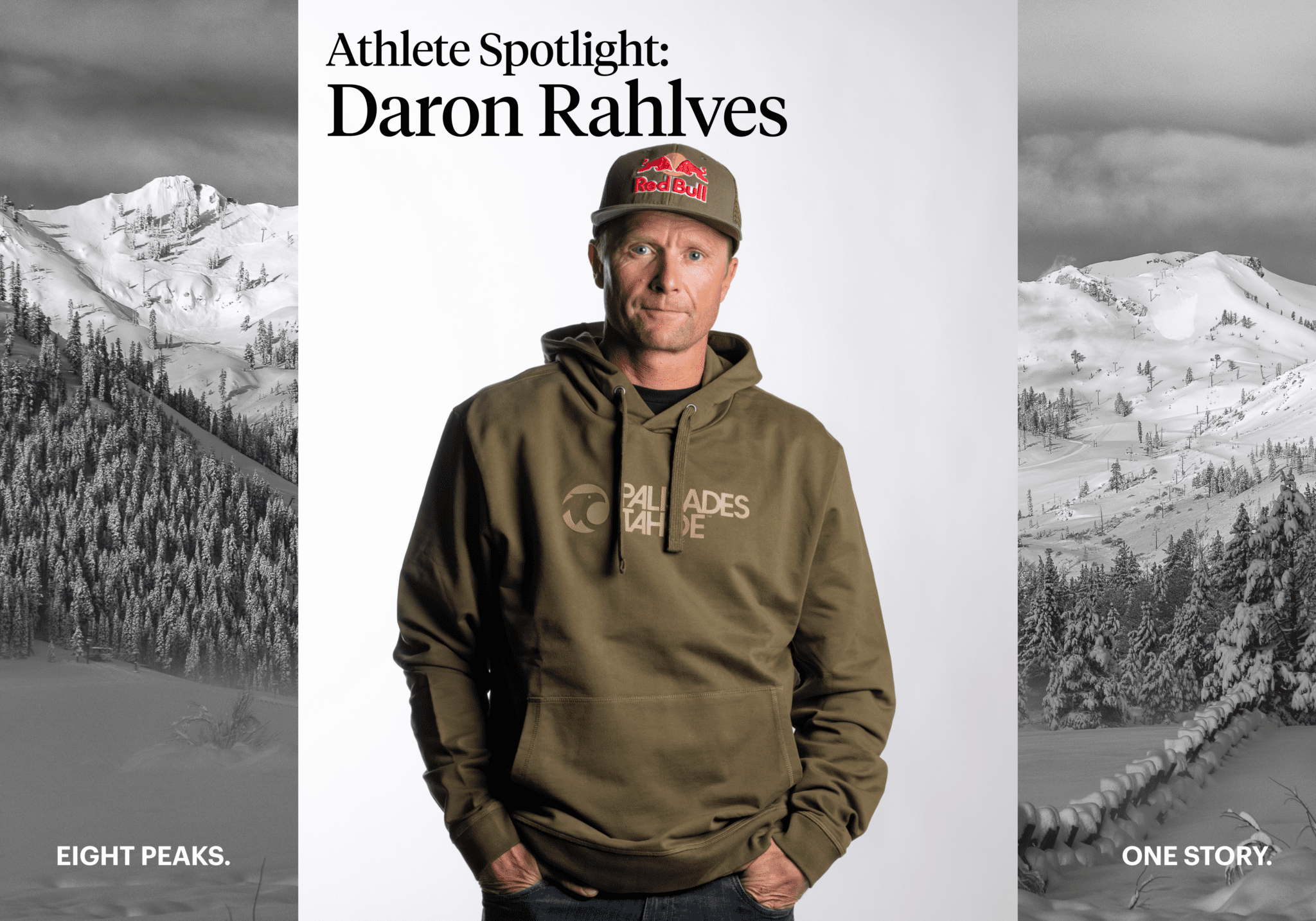
From standing on top of World Cup podiums to charging some of the biggest lines in the world, Daron Rahlves has built a career defined by going all in every time he clicks into a pair of skis.
As one of the most accomplished ski racers in American history, Daron racked up World Cup victories, World Championship medals, and a legendary win on the Hahnenkamm, cementing his place among the sport’s elite. But what has always set him apart isn’t just results, it’s how he skis. Fast, aggressive, and always on the edge, whether it’s a race course, a film segment, or a powder day at Palisades Tahoe.
Even after stepping away from the World Cup, that mindset never changed. From ski cross and 2008 X Games gold to big-mountain film segments in Alaska earning 2010 Powder Mag Line of the Year award, Rahlves continued to evolve, proving that he was never just a ski racer, but a skier through and through.
Today, that same energy is still on full display at Palisades Tahoe, where he remains one of the mountain’s most iconic hard chargers. Whether he’s ripping KT-22, building events like the Rahlves Banzai, or inspiring the next generation, his impact on the Tahoe community runs deep.
The Return of the Rahlves’ Banzai
Created by Daron himself, the Banzai blends big-mountain freeride terrain with the head-to-head intensity of ski and snowboard cross. Athletes drop in four at a time, charging natural features and battling all the way to the finish.
After a decade away from Palisades Tahoe, the event returns April 10 – 12, bringing together past champions, rising talent, and a new generation ready to test themselves on one of the most iconic venues in the sport.
We sat down with Daron to talk about his journey, his mindset, and what continues to drive him on and off the mountain.
What was your childhood development path as a skier? Did you go through Teams programs at Palisades?
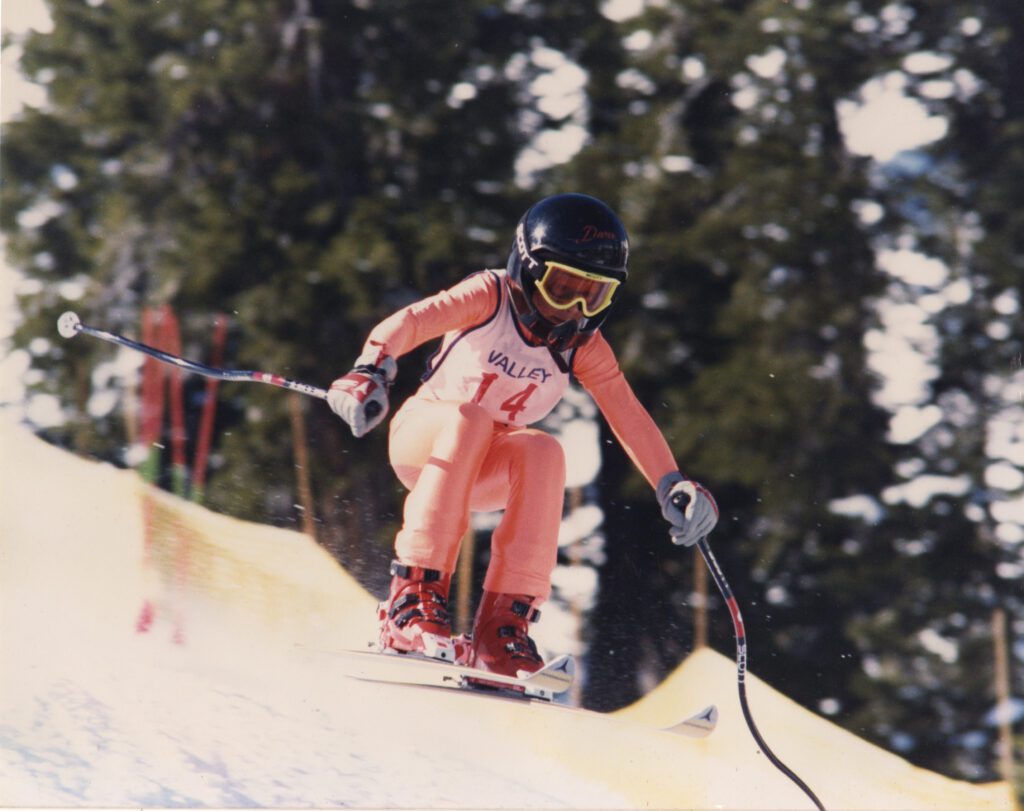
Yeah, it all started for me at Alpine Meadows doing NASTAR. My family bought a place up in Alpine when I was seven. As a family we’d go out together, take a couple laps, and then my parents would go ski while my sister and I jumped in with the race team.
I eventually made my way over to the team on the Olympic Valley side because it had more depth and competition. At that point, we were still living in the Bay Area, so I was basically a weekend warrior until I was 12. Then we moved up to North Tahoe and I got to ski almost every day!
I went to North Tahoe Junior High for a year, then the Olympic Valley School, and spent that time skiing with the Olympic Valley team. I have a lot of memories from those early days. One that always stuck with me was this simple incentive we had. If you could ski top to bottom down West Face without stopping or zigzagging too much, you got to grab a piece of candy from the team room. At that age, that was all the motivation you needed.
At the same time, you’re looking up at guys like Todd Kelly and Toni Standteiner ripping around KT, and you just want to chase them, maybe get noticed by the older athletes. That environment really pushed me.
My path wasn’t super straightforward after that. I bounced around different programs and coaches, trying to find my way. After high school, I actually deferred college for a year to go all in on making the US Ski Team. I came really close, convinced my family to give me one more year, and then finally made it two years out of high school.
Once I got on the team, things started to take off pretty quickly. Within a year, I was finishing fourth in a World Cup Super-G and landing top tens. From there, it just built into a long career on the World Cup, but those early years at Alpine and Olympic Valley really set the foundation.
You made the move from California to attend Green Mountain Valley School in Vermont. What led to that decision, and how did that experience shape you as a skier?
Going back East was a big adjustment, especially coming from Tahoe. It’s a totally different kind of skiing. You’re racing on harder snow, a lot of ice, tighter runs cut through the trees. As a kid from the West Coast, it can be tough to stay mentally locked in because it’s just not the same as what you grow up loving.
But at the same time, it really sharpened my fundamentals. You have to be precise back there. It builds strong technical skills, especially in GS and Super-G, and forces you to become a really good skier in terms of your turns and edge control.
Then every spring break, I’d come back to Tahoe and just let it loose on KT, Siberia, and all that terrain. That contrast was huge for me. I remember even bringing a teacher from GMVS out to Tahoe, and it was fun to show him what I grew up skiing. For me, that was always the reminder of why I loved the sport.
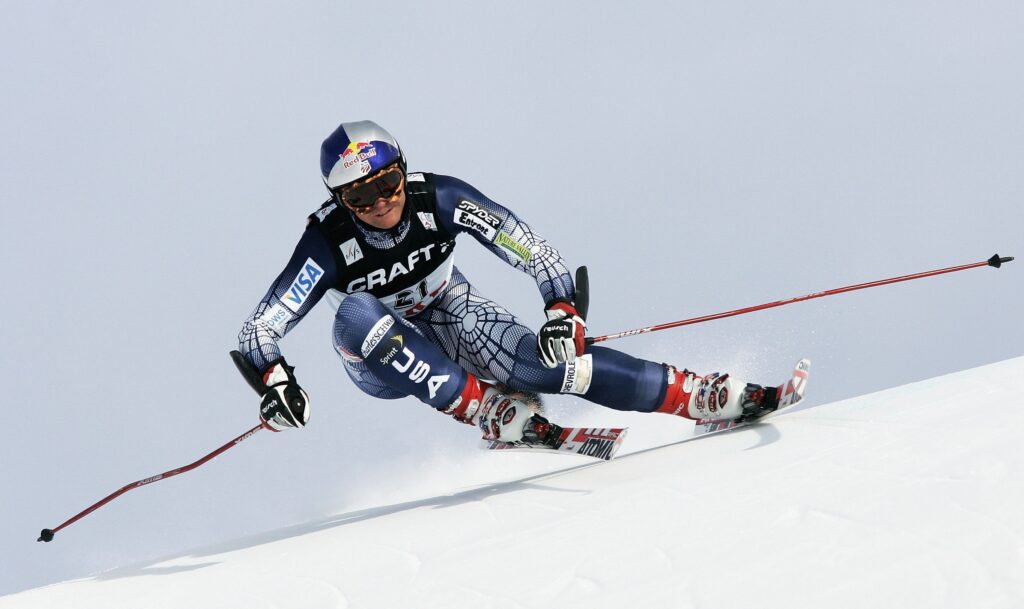
How old were you when you turned pro, signed your 1st contract, & who was it with?
Making the US Ski Team at 19 was when I signed my first financial contract with Rossignol. It wasn’t much money, but pay bumped up quickly at 21 when I scored World Cup points placing 23rd, 4th and 11th during the 1995 season.
Do you have any mentors or coaches that have been particularly influential in helping you succeed in becoming a professional skier?
My dad, he was my strongest mentor in life. He showed me how to put in the work to be successful. I was fortunate to be exposed to many great ski coaches and I soaked up knowledge from them. Then later in my career Johno McBride, Pedro, Brigham, Per and Phil were my A Team of coaches.
You’ve competed in four Olympics as well as countless World Cup events. How do the Olympics compare to a typical World Cup? Does one feel more special, or are they all just another race in the moment?
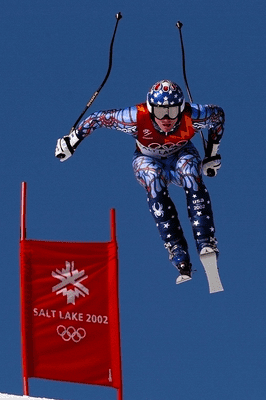
The Winter Olympics get more global and out of industry attention for our sport of skiing and individual athletes. It’s a huge opportunity to showcase your sport and self. World Cups produce crazy crowds in Europe and the White Circus delivers a more core following.
Speed skiing and ski racing require a unique relationship with risk. How did you learn to manage fear and trust yourself when everything was on the line?
First, I decided what I want to do, that usually involved taking risk with consequences. Fear is definitely part of that game and to acknowledge it then deal is critical. From there I put in the mental work to have no doubts once I would commit. My confidence and trust are high because I trained to physically handle all those situations I was willing to put myself into. The power of the mind, the will to make great things happen and putting in the work make a sweet combo!
Over the course of a long career, injuries are almost inevitable. Have there been moments where recovery really tested you, and how did you stay mentally sharp while working your way back?
Getting hurt is tough to deal with, but I looked at it as a bump in the road. It would slow me down, but not stop me. Luckily I didn’t loose a season to injury so I was able to keep progressing. They way I trained and took care of myself helped keep me fit, perform and reduce injury.
You were able to transition from an elite ski racing career into freeride filming, something very few athletes have done. What allowed you to make that shift?
I’ve always thought of myself as a skier first, not just a ski racer. I was fully committed to racing, but I loved being out skiing powder and just exploring the mountain. That was always a big part of who I was.
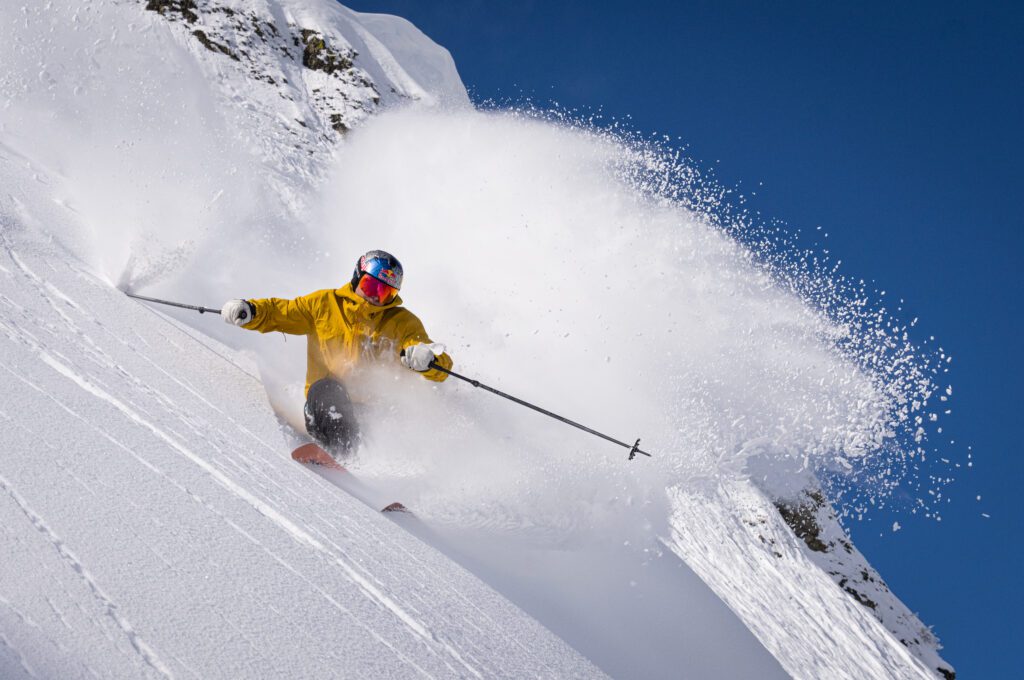
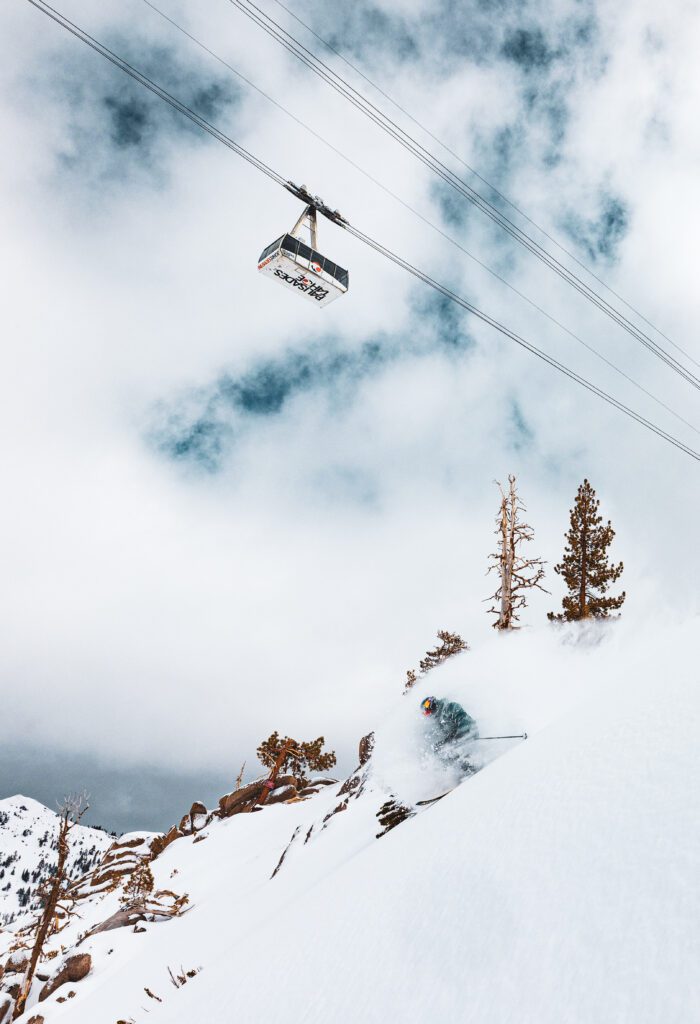
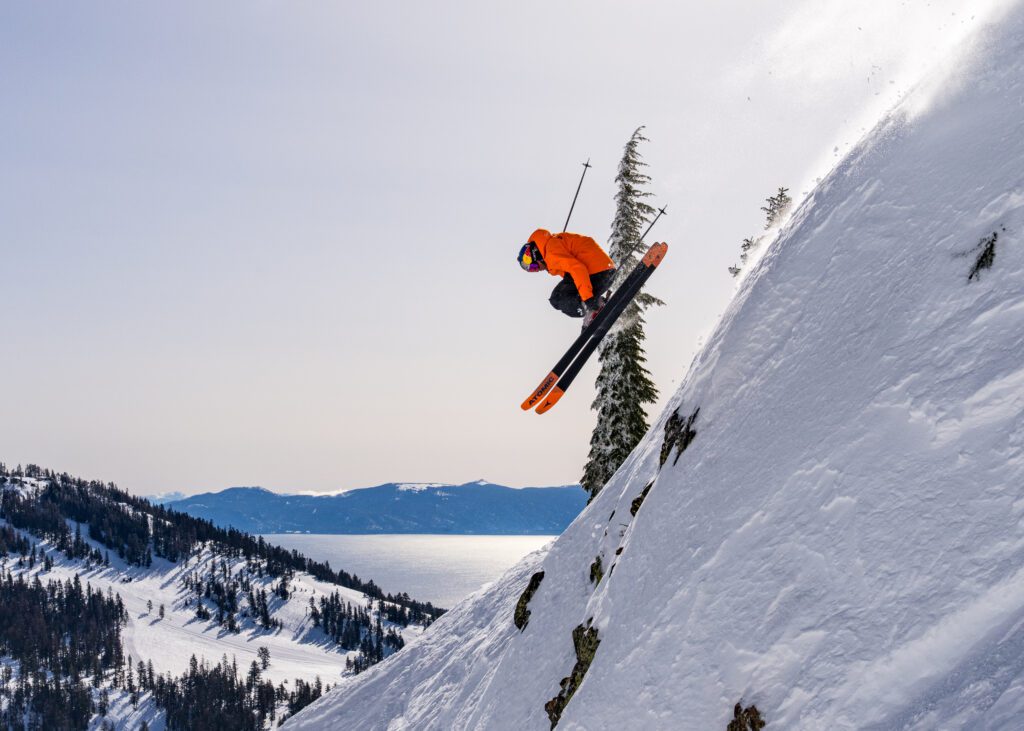
I remember we had a snow day on a scheduled DH training day in Kitzbühel and I couldn’t get any of the other American guys to go freeski. I met up with Swiss Ski Super Star Didier Cuche for a few laps and had a blast. At one point he told me, “This is why we crush it here, we love to ski.” That stuck with me. It’s not just about gates, it’s about being a well-rounded skier.
That mindset helped a lot when I transitioned. I also had built a name in ski racing, which opened some doors, and I had great support from sponsors like Atomic and Red Bull that helped connect me with the right people. I started working with Rage Films and Warren Miller, then moved into projects with MSP and TGR, and that kind of naturally evolved from there.
I knew I wasn’t coming in with a freestyle bag of tricks, so I leaned into what I did best. I focused on finding strong lines, skiing fast, and letting my downhill background show through. It was really about bringing that style into a different environment.
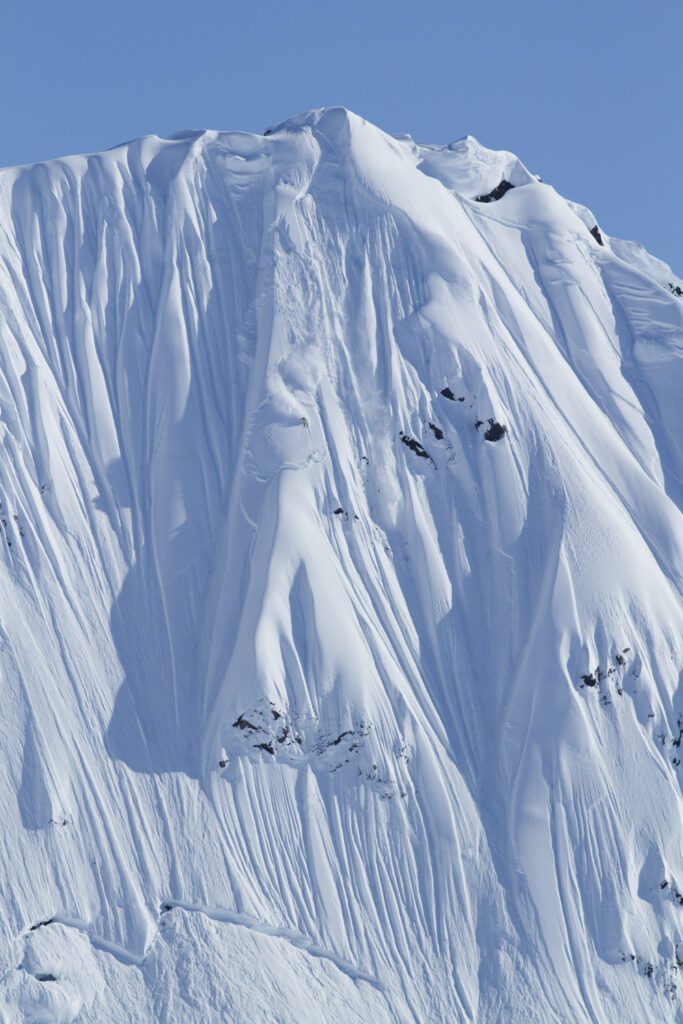
At the same time, it was a whole new challenge. I remember Jeremy Nobis telling me that skiing in Alaska was on another level, and I kind of pushed back at first. But when I finally got up there, I realized he was right. It’s a completely different world. In ski racing, you inspect the course top to bottom and know every detail. In Alaska, you’re looking at a line and committing without that same level of certainty, and the consequences are real.
That challenge is what drew me in. I’ve always liked pushing myself into new environments, learning from the people around me, and seeing what I’m capable of. Freeride gave me that next step.
After competing at the highest level, how did you redefine success for yourself once your career evolved beyond racing?
My racing career gave me a platform to capitalize on a number of opportunities in skiing where I wanted to stay. Skiing is a lifestyle for me and I love it. I worked to reinvent myself in other aspects that would keep me physically involved and to share the gift, feeling, challenge and views of being outdoors on snow. Yes, I built my life and career on ski racing, but I always considered myself a skier…not just a ski racer. After alpine ski racing I got into ski cross, big mtn skiing, lots of resort laps, backcountry touring, corporate ski events, event promoter and joined the Tahoe Nordic Search and Rescue Team.
You’ve raised your family here in Tahoe, what has it meant to you to raise kids in a mountain community, and how has that lifestyle shaped them?
We live in a special place and it’s shaped me into who I am and I love who I am. My wife Michelle loves the mountains almost as much as the beach and like me, sees the value in growing up in a smaller town environment with fresh clean air, water and the freedom to roam. Tahoe offers so much of that. We also exposed them to the beach life in SoCal growing up so they can do it all. That childhood has given them the ability to connect with others and be confident in themselves. As 18 year olds now, our twins are experiencing a new chapter in their lives and still love calling Tahoe home.
What does a typical summer look like for you?
Summers are all about staying active, spending time with family, and mixing in as many outdoor pursuits as possible.
One of the highlights this past summer was a trip to Chile with my family. We spent (take out about) 10 days down there, including a couple of heli-skiing days with Stellar Adventure Travel, my buddy Reggie Crist’s heli op, and that was really special. Being able to share something I have loved for so long with my kids, especially as they have grown into strong skiers themselves, is incredibly rewarding.
There was one moment in particular that stood out. We were looking at a line called Super Tube, scouting it from below, and I told the kids that if conditions lined up, we might give it a shot. When we finally got up there, it was definitely intimidating, with a bit of a rollover, but everything checked out.
My daughter Miley was a little hesitant at first and told me I should go first, but I told her, “No, this one is yours.” She dropped in, absolutely ripped it, and was hooting at the bottom. That was easily one of my favorite moments of the summer.
It was also a meaningful trip because not long after we got home, we were dropping the kids off at college. One went to the University of Utah and the other to San Diego State University. Having that time together as a family made it even more special.
Outside of skiing, I am usually on dirt or in the water. I spend a lot of time mountain biking and riding moto, and I try to get out on the water whenever I can. Water skiing, wake surfing, and similar activities are a big part of my summers. I have also been getting into surfing more, especially now that we have a reason to get down to San Diego more often.
At the core of it, I have always been driven to stay active and challenge myself. Whether it is skiing or another sport, I enjoy pushing my limits, calculating risk, and continuing to build both physical and mental strength. All of that carries over into skiing.
More than anything, I just love being outside, staying active, and taking advantage of everything summer has to offer.
You’ve spent a lot of time dirt biking as well. What draws you to that sport, and what do you enjoy most about it?
I grew up riding dirt bikes with my dad and my grandfather, but once ski racing took off around 14, that became my full focus. I moved from Tahoe to Vermont for ski academy, and from then through my late 20s, I barely touched a dirt bike. Everything was about training, competing, and being smart about where I took risks.
Once I started establishing myself on the World Cup, I’d come home after the season with about a month and a half of freedom. That’s when I picked moto back up. I missed it, and it was just fun again, but I also realized how much it helped me mentally. Physically, you can train in the gym all you want, but motocross challenges you in a different way. It forces you to manage risk, stay sharp, and make quick decisions, which translates directly to downhill skiing.
You’re out on a track watching someone hit a line clean, figuring out the rhythm, visualizing it, doing a few dry runs, and then finally committing. When you land something like a big jump or nail a section, that feeling is a huge high. There’s risk, but there’s also that reward, and that’s something I’ve always been drawn to.
Moto became a way for me to stay mentally dialed through the summer so I could jump straight into downhill training ready to go. I had to keep it a little under the radar from the ski team since they weren’t too fired up on the risk factor, but for me, it was worth it. It made me a better, more complete athlete.
Even now, that drive is still there. I train hard year-round, whether it’s on the bike, in the gym, or on a mountain bike, and it all feeds into each other. It keeps me motivated and competitive, not just in moto, but in skiing and in life overall.
After years of pedal-to-the-metal racing, how do you stay in shape and keep skiing fun for yourself today?
I stay in shape with lots of movement outside and indoors, fueling myself right and good recovery.
Skiing provides such a variety of challenge with all the terrain, it’s easy to keep it interesting. Arcing turns, skiing the steeps, working all the terrain into a run, going fast, going slow, catching air and sharing all this with my family, friends and others keeps it fun!
The Rahlves Banzai is coming back this year at Palisades Tahoe. What originally inspired you to create an event like this, and what excites you most about seeing it return?
The original inspiration actually came from an event in Austria called the Der Weisse Rausch or the White Rush. It was a mass start race down natural terrain, and I remember thinking while I was still ski racing that once I was done, I wanted to do something like that. By the time I retired, that event wasn’t around anymore, so I figured why not create something myself.
We started with a couple one-off events, and they were just so fun that it naturally grew into the Banzai Tour. At its core, it goes back to my roots, just racing your buddies down the mountain. It’s a true test of skiing and snowboarding ability, but also of mindset. There’s that intimidation factor, lining up head-to-head on natural terrain, and you really find out what you’re made of.
What I love most is watching people push themselves. You see athletes step into something that feels big and a little intimidating, and then they figure it out. Nine times out of ten, they rise to the challenge. That progression, from the early days of Banzai to where it got after a few years, was incredible to watch across both skiing and snowboarding.
It’s also just a really fun format. As a competitor, it’s intense and exciting, and for spectators, it’s easy to understand. You can actually see the moves, the passes, the lines people take. It’s not just one person on course, it’s a battle all the way down.
Bringing it back to Palisades Tahoe is huge. It’s such a perfect venue for it. And what’s been exciting already is seeing the energy build again. People are reaching out, training for it, getting their friends involved. That word of mouth is everything.
I love seeing the mix of athletes too. You’ve got past competitors coming back alongside a new generation of younger skiers and riders. That’s what it’s all about, getting as many people involved as possible and creating something bigger than just a local event.
Besides the Rahlves Banzai, what’s one of your favorite events we do here at Palisades Tahoe?
I’ve got to give you two. First is the Pain McShlonkey Classic. That one’s just pure fun. It’s goofy, it’s off the wall, and it really captures Shane’s spirit. He was always having a good time, but still charging and skiing at a high level. That event is all about celebrating that energy, not taking things too seriously, and just enjoying being out there.
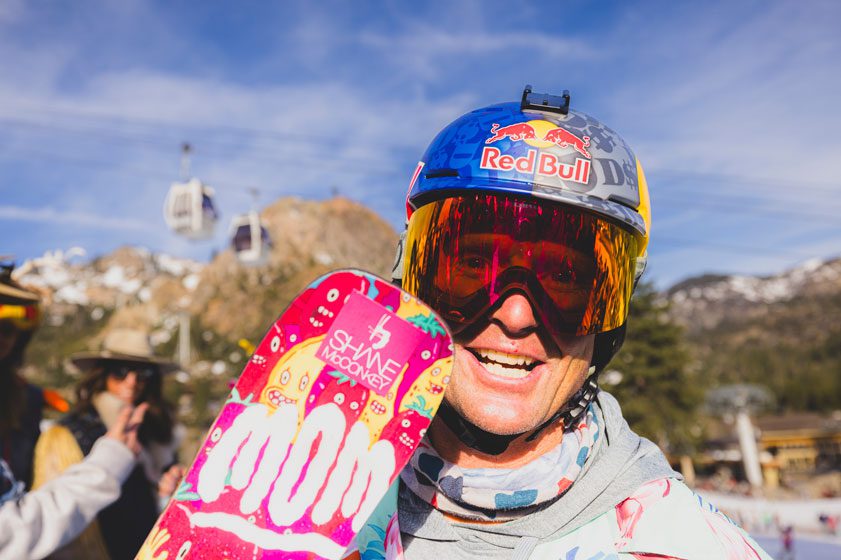
The other one is the Mothership Classic. That’s a totally different kind of challenge. It’s all about stacking as many laps as you can on KT in a day, and it really tests your endurance. I’ve never gone all in for max laps because I always end up bringing out the big downhill skis early and skiing lines like West Face and the alternates, so I’m kind of playing catch up later. But that’s part of what makes it fun.
In general, I just love events. It’s a chance to push yourself, be around other people who are fired up, and feed off that energy. Whether it’s ski racing, freestyle nationals, freeride comps, or even pond skimming, there’s always something going on and a good vibe around it.
You were recently inducted into Forged, a statue honoring decades of legacy, community, and excellence in winter sports. What does that kind of recognition mean to you when you look back on your career?
It’s a special recognition. I’m proud of how that shows I’ve made an impact for our community inspiring others through my ski career. Ski racing success is measured by fast times and results, but what’s equally important to me is how I can inspire others encouraging them to step up themselves. I was most satisfied by my effort and I want others to feel the high of giving their best no matter the outcome.
Daron’s career has always been about more than results. It’s about the way he approaches skiing, the willingness to take on challenges, and the drive to keep evolving no matter the stage of his career.
His passion for skiing and connection to the Tahoe community continues to define his legacy. Whether he’s lining up for another Banzai, skiing with his family, or pushing himself in new ways, that same competitive fire still burns.
At the end of the day, Daron isn’t just a legend of the sport, he’s a reflection of what makes this place special. A skier who never stopped evolving, and never stopped having fun doing it.
To read more stories about our Professional Athlete Team check out our other Athlete Spotlight blogs.