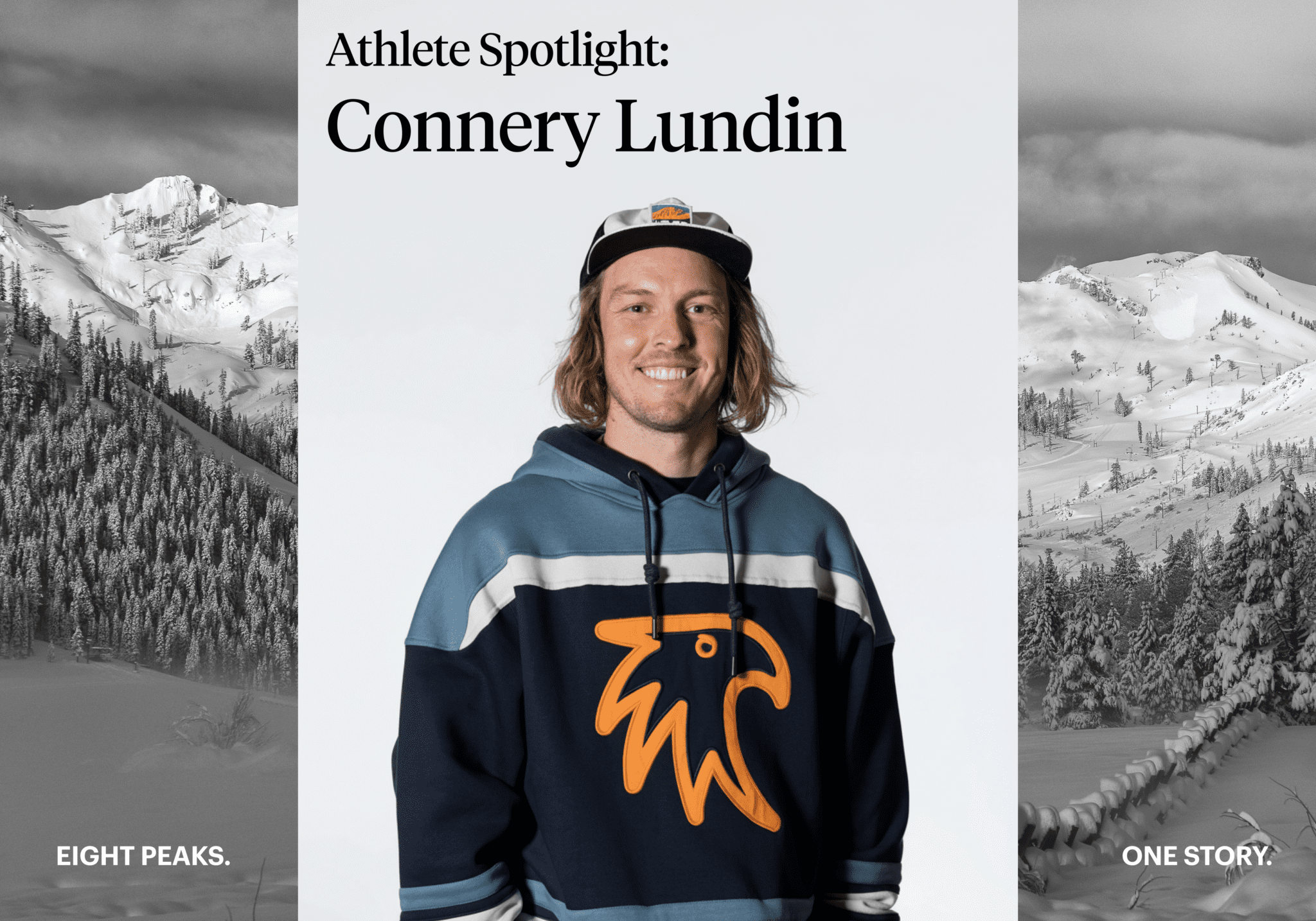
From his first turns at age two on the slopes of Palisades Tahoe to winning the 2015 Freeskiing World Tour, Connery Lundin has built a career defined not just by jaw-dropping descents and laid out backflips, but by a deep love for skiing. Along the way, he’s appeared on magazine covers, starred in countless ski films, and cemented his place as one of big-mountain skiing’s most stylish and fearless athletes.
But Connery’s impact goes far beyond competition results and film segments. He’s a mentor, a community builder, and living proof that the best skier on the mountain is the one having the most fun. Whether he’s coaching young athletes to push their limits, or simply charging laps with friends on KT-22, Connery represents everything that makes Palisades Tahoe special.
This winter, Connery will represent the Tahoe ski community at the Natural Selection Ski Super Session at Palisades Tahoe. It’s a full circle moment for an athlete loyal to the Olympic Valley community and a chance to showcase the terrain and culture that shaped him on the global stage. While Connery has skied all over the world, Palisades Tahoe has always been home.
We sat down with Connery to talk about his journey, his philosophy, and what it means to give back to the community that made him.
When was the first time you ever came to Palisades Tahoe?
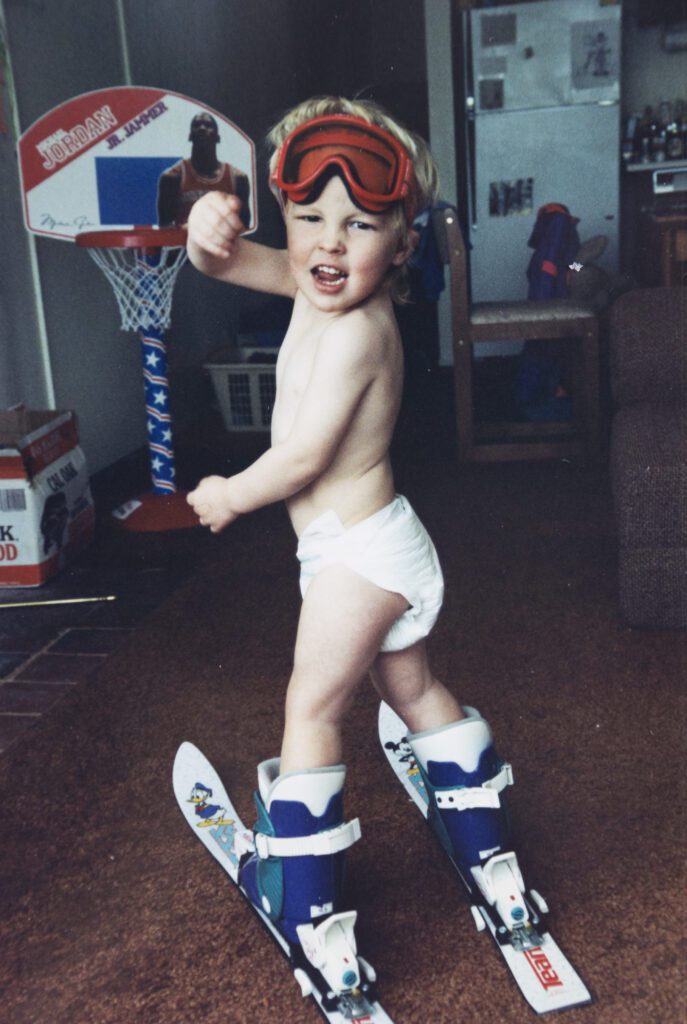
I first came to Palisades Tahoe when I was basically a baby. My parents started bringing me up here when I was one or two years old. My brother is ten years older than me, and he was on the mogul team back in the day with Johnny Mosley. I’m not sure Johnny would remember that as clearly as my brother does, but that’s how deep the family connection goes.
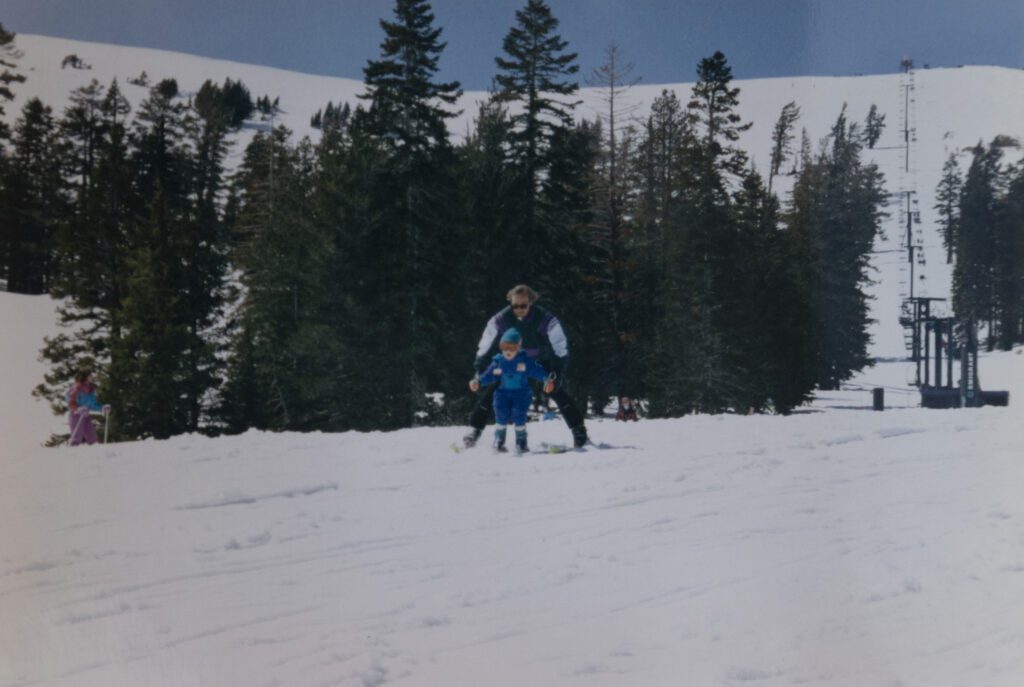
My parents were classic weekend warriors from the Bay Area, living in the East Bay around Piedmont and the Oakland Hills. As a little kid, I honestly didn’t love skiing right away. It was cold, I had a lot of gear, and I was being pulled away from my friends on the weekends. I wasn’t one of those kids who had an instant lightbulb moment where I knew this was what I wanted to do forever.
What was your childhood development path as a skier? Did you go through the Teams programs at Palisades?
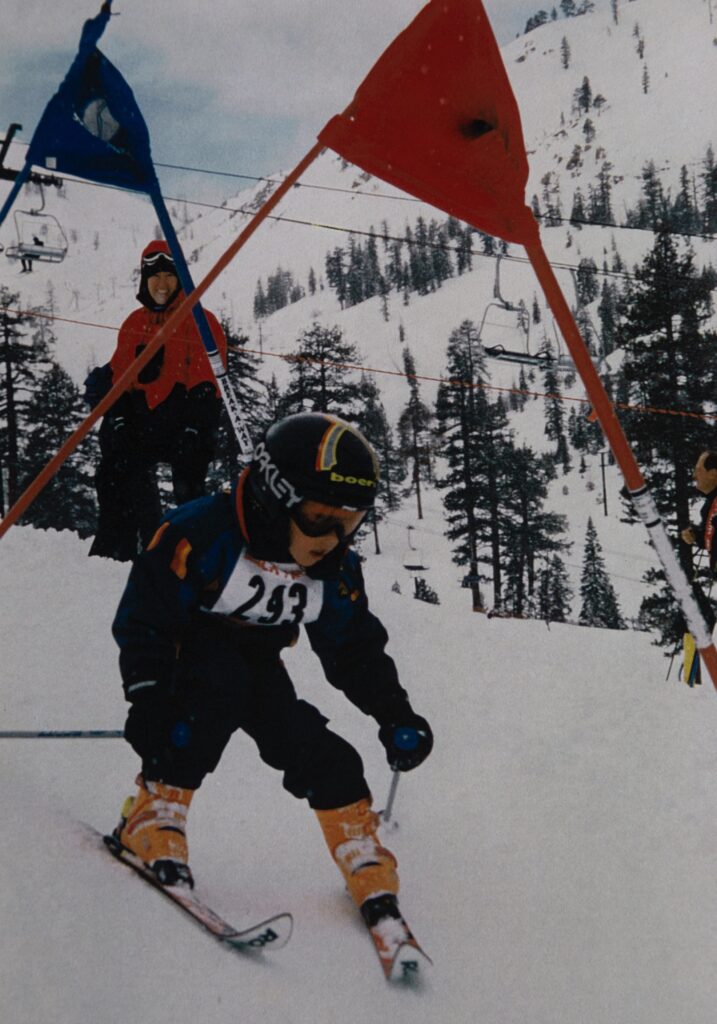
I went through all the programs starting with Shooting Stars, Mighty Mites, Purple Stars, and eventually Gold Star.
I was a really small kid compared to my peers, so slalom racing became my discipline. But I always loved skiing the mountain, powder days, sliding rails, and just exploring everything the resort had to offer. I think I first started sliding rails around age 11 and doing flips by 12. I’d even bring my slalom skis on non race trips just to slide rails and hit the halfpipe.
Back then, part of being on the Palisades race team was also about skiing the mountain hard. That was just part of the team culture. Eventually, when it came time to choose a path, the options were racing or moguls, and I committed fully to racing. I raced all the way through high school until I was 18, and then went on to college. Racing was a huge part of my upbringing here and really shaped the skier I became.
What made you decide to move to Olympic Valley?
I was a weekend warrior until my sophomore year of high school. That’s when I moved up full-time. We were renting a little cabin in the valley. My dad still had to work down in the Bay, and my mom lived up here with me. She wasn’t really a winter person so it was a big sacrifice on her part. She had to make fires, drive me to school, get me to the mountain, and handle everything else. Looking back, I really appreciate what they did to make it happen.
Do you have any mentors or coaches that have been particularly influential in helping you succeed in becoming a professional skier?
Back in the day, there was a coach named Strawberry. He was a wild, awesome, really cool guy with crazy red hair. There was also Hilary, I don’t remember her last name, and Lee Schmidt. These are coaches who really stood out to me because they made skiing fun. It wasn’t just about racing or gates; it was about skiing as a whole. They encouraged creativity, like trying flips or pushing your limits, which made the sport exciting and kept me motivated.
On top of that, there were so many incredible skiers at the resort. You would see them on the chairlift in their speed suits doing intense training laps, and it was inspiring. Just seeing that level of skill pushed me to get better.
Was there a defining moment when you knew you were going to fully commit to becoming a professional skier?
Honestly, it all kind of happened by accident. I quit ski racing when I was 18 or 19. Before that, the plan was to try to make the U.S. Ski Team, and when that didn’t happen, I was pretty burnt out. Ski racing stopped being fun. I was planning to race in college, but instead I ended up going to school in Boulder, and I didn’t need skiing to get in at that point.
My freshman year, I just skied for fun. No training, no plan, no agenda. Then my sophomore year, I was living with my roommates Tony Seibert and Teton Brown. They signed up for a freeride competition, so I decided to enter too. I ended up getting third place. Suddenly I was on the podium, hanging out, drinking a Sierra Nevada, and I didn’t even have a sponsor. People started coming up to me asking if I wanted support, and it all kind of happened overnight.
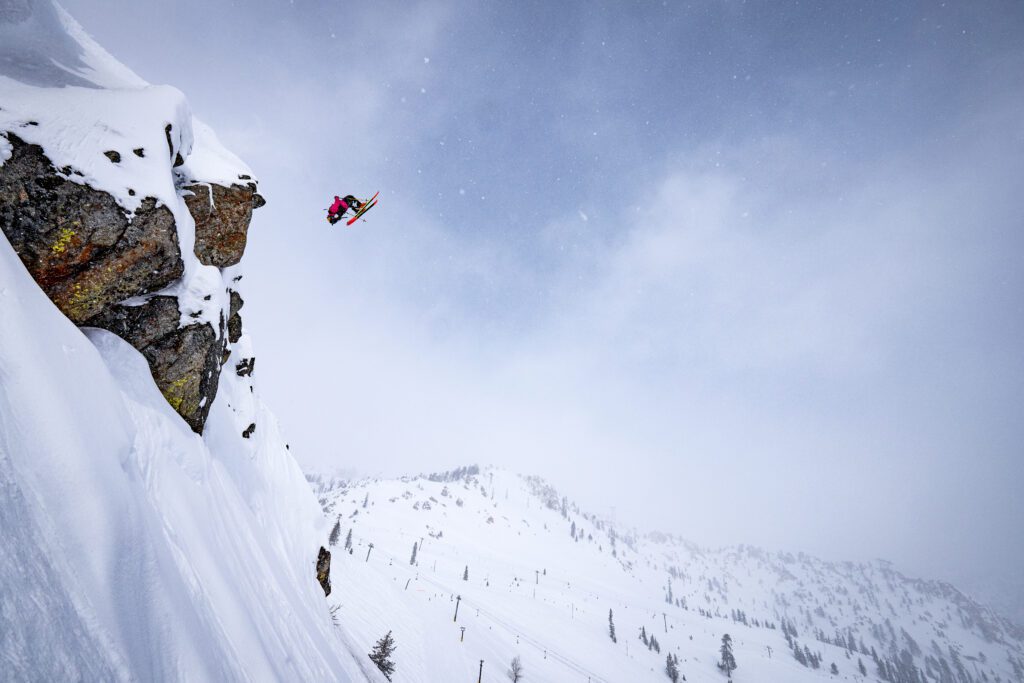
What really hooked me was how different it felt from ski racing. There was so much camaraderie and community. Jim Jack, who was a longtime judge and a huge presence in the scene, really emphasized the love of real skiing and the culture around it. The vibe he brought to big mountain skiing was something I had never experienced before.
I kept competing while I was in school and had more success over the next few years. I don’t think I podiumed again during college, but I earned a Sickbird belt buckle, which was a big deal back then, along with the Young Gun award from The North Face and a Tommy Gun trophy. All of that came from my ski racing foundation and growing up skiing Palisades. Charging powder days on GS skis, trying backflips, and skiing the halfpipe all translated really well.
Most importantly, skiing became fun again. After college, I realized I was half in and half out, working in the city and thinking about a traditional job, which sounded pretty awful to me. That’s when I decided to go all in. I lived a pretty dirtbag lifestyle for a couple of years, chased the competition scene, and committed fully. That was the moment I knew I was going to try to make it work, whatever it took.
What was it like getting your first sponsor, and how did that moment shape the next phase of your career?
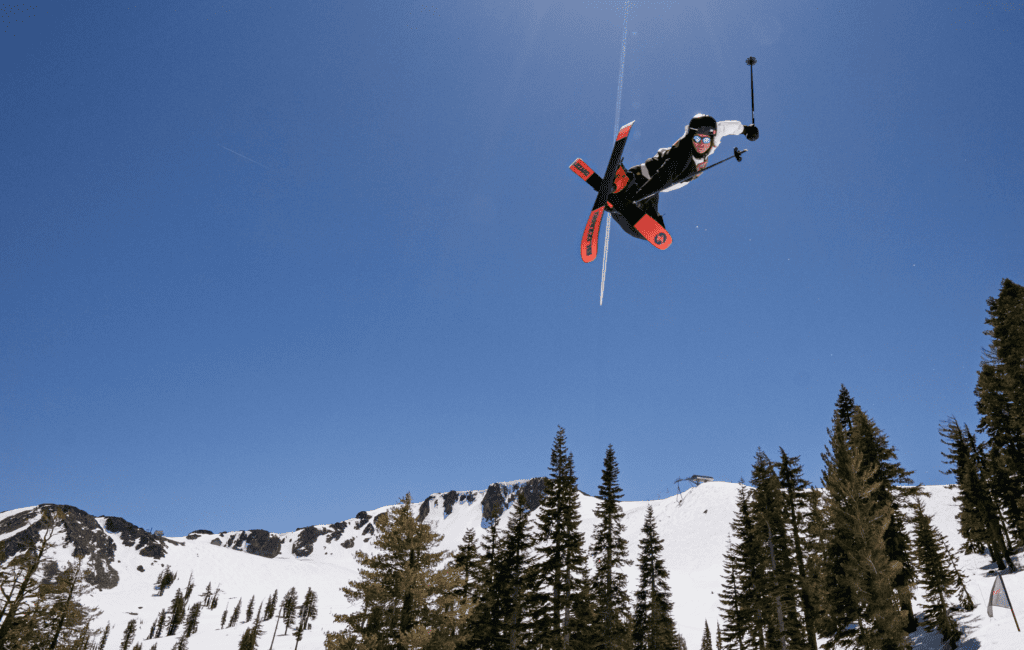
It definitely didn’t happen overnight. After a few years of competing while I was still in school, I started getting some support toward the end of my time at Boulder. Blizzard and Tecnica came on board, but at that point it was mostly product. I was getting free gear, which was amazing, but there was no financial support yet.
It wasn’t until 2015 that I received any kind of real sponsorship contract. The year before that, 2014, was my first year out of college and fully committed to skiing. I was really focused on trying to qualify for the Freeride World Tour. The final qualifying event was in Big Sky, and if I had won, I would have made the tour. I was sitting in third or fourth place going into finals, but I made a huge mistake. I was in a really unhealthy headspace, willing to risk everything, and I sent a cliff completely wrong. I landed on rocks and honestly was very lucky to walk away at all.
That crash was a massive reality check. It messed with me physically and mentally, and even now it still affects how I approach big drops. The following year, I ended up winning the Freeskiing World Tour, and I truly believe that happened because my mindset had completely changed. I had not planned on competing that season, and I went into it with way less pressure. I was just happy to be skiing again.
Up to that point, big mountain competitions had started to feel a lot like ski racing. I was taking everything too seriously, and it stopped being fun. That accident forced me to reassess my risk tolerance and remember why I loved skiing in the first place. I had to relearn how to compete while actually enjoying it.
Before winning the world title, I was already working with Blizzard, Tecnica, and Strafe, but after the championship I was finally able to get small contracts. That was huge for me at the time. I was working two restaurant jobs year round just to make ends meet, so getting any kind of contract felt surreal.
I also knew I didn’t want to compete forever. The competition environment is intense and dangerous, and I wanted something more sustainable. The following year, I made the decision not to compete and instead focus entirely on filming. That transition was difficult, and at the time filming looked very different than it does now. I reached out to production companies and brands and did not hear much back.
Then in early 2016, I got a call from Powder magazine about being part of their first feature film. That became my first real filming experience. We filmed in a national park, and it marked the beginning of my transition from competition skiing into filming, which is a big shift in this sport and one that completely changed the direction of my career.
What was your favorite film project to be part of & why?
There have been a lot of great projects, but honestly, my favorite will always be the first film I was ever a part of. It was a Powder magazine movie called Monumental, which was made to celebrate the 100th anniversary of the National Park Service.
The concept was incredible. We skied in several national parks, including Yellowstone in the middle of winter and Yosemite. At the time, I was completely new to filming, so I was saying yes to everything. Every experience felt new and surreal. We winter camped in Yellowstone and I was skiing alongside people like Colter Hinchcliffe, Lynsey Dyer, and Andy Mahre. They were already legends in the sport, and I was just trying to keep up, wondering how I even fit into that group.
There was one filming day in particular where I skied some of the best lines of my life. That was the first moment where it really clicked for me. I remember thinking, okay, maybe I actually belong here. I still deal with imposter syndrome, but that project gave me a huge confidence boost and made everything feel real.
On top of that, the whole experience was intense. It was brutally cold, around zero degrees for nearly a week, but that only added to how memorable it was. That film set the tone for my career and will always stand out as the project that made me realize this was something I could truly do.
What inspired the now-iconic naked ski shot that landed you on the cover of Powder Magazine?
I have to give Shane McConkey the credit he deserves because he really pioneered the whole naked skiing thing. And honestly, as a kid, I apparently just never wore clothes. I would run around the neighborhood naked at birthday parties and stuff. So I think it was always lurking somewhere in my subconscious.
Fast forward to my first year filming with Matchstick, and Scott Gaffney was always pushing what I like to call “bad good ideas.” We were shooting above Emerald Bay one day and he just goes, “You should do this naked.” And I was like, alright, why not.
From there it kind of became this running joke. It was never about ego. If anything, when you are naked and it is freezing outside, there is no room for ego at all. It was just for fun.
Getting the Powder cover was a dream come true, and I remember thinking I had never really seen a proper naked powder skiing shot where you are fully committing to it. We ended up doing it cat skiing in Canada on the last day of the trip. It was one run, one take, kind of flat light, slightly wet snow, but somehow it all came together.
That cover really represents what skiing is to me. It is radical, cool, fun, and also a total joke at the same time. If people see that cover and it makes them laugh, then I have done my job. We are entertainers at the end of the day, and I had a blast doing it.
What has been one of your all-time favorite days at Palisades Tahoe?
It was probably my first day filming with Matchstick Productions at the end of 2016. I got a call from Scott Gaffney and linked up with him, Xander Guldman, and Ross Tester.
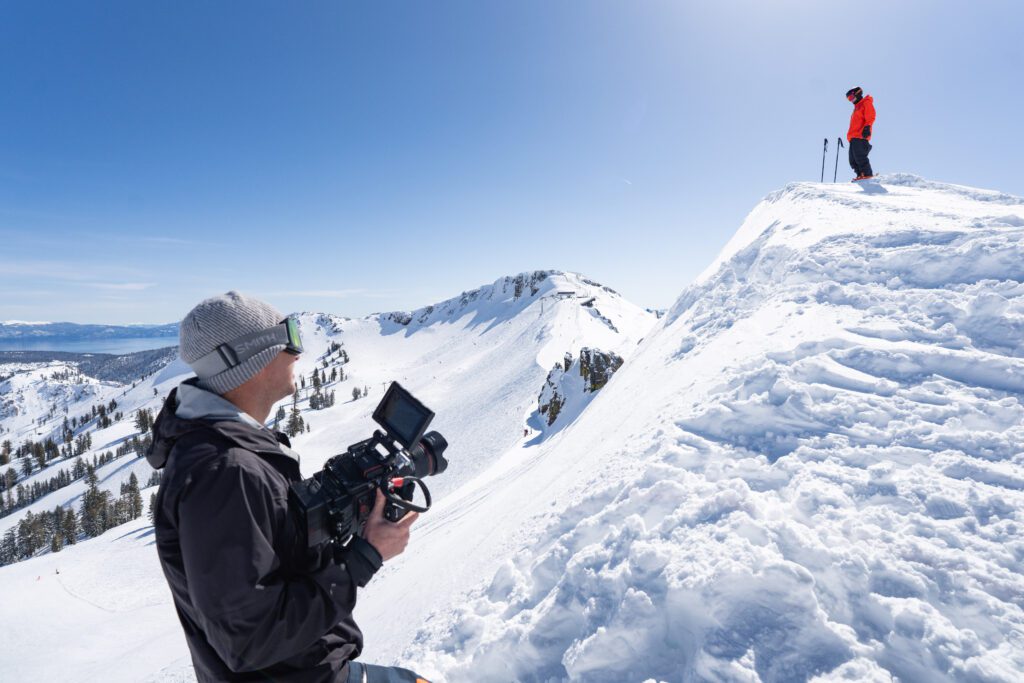
It was one of those full circle moments. Filming at my home resort with Scott Gaffney, alongside two younger skiers who were absolutely ripping, felt pretty surreal. We skied the Palisades on a great day, then made our way over to Mainline and Grand Chief and checked off all the classic zones.
It was a cold bluebird powder day, everyone skied well, and everything just came together. That day definitely stands out as one of my most memorable days at Palisades.
Last year, you had the opportunity to judge the Cushing Crossing. Is there a particular year or moment from the event, either competing or judging, that stands out as especially memorable?
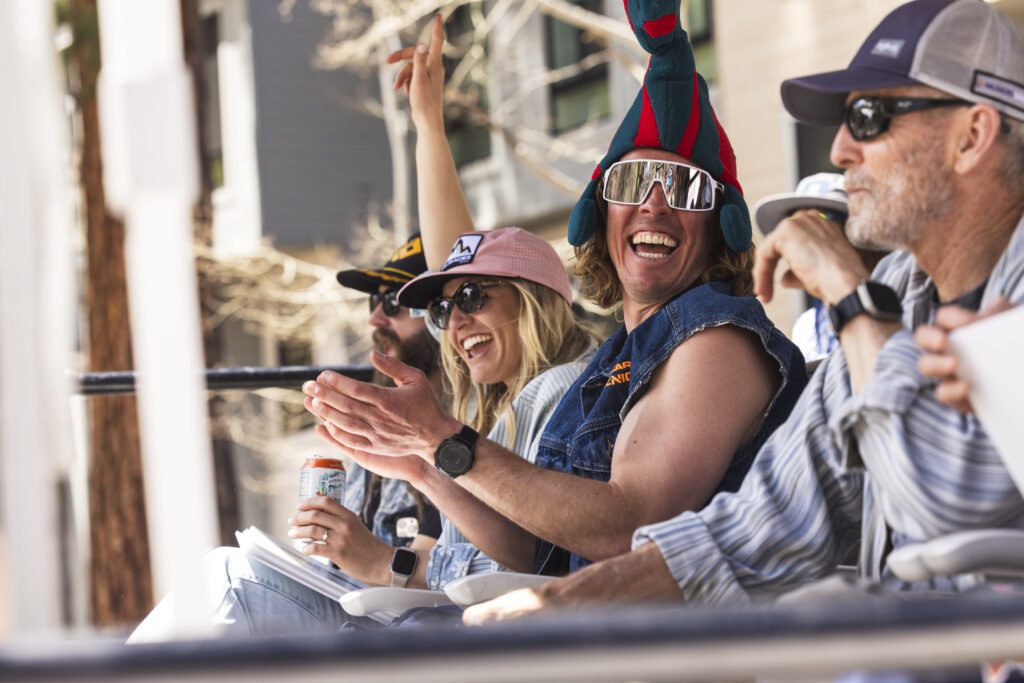
Oh man, last year’s performances were honestly really impressive. But one moment that always stands out for me is the year I lost to Cody Townsend. I am still a little bitter about it, but to be fair, he absolutely deserved the win.
We both had the same idea and planned to do a nose butter 360 across the water. I remember thinking about waxing my skis and then telling myself I could not take it too seriously. I was like, you cannot be ski racer Connery about this. Waxing your skis feels like cheating.
So I went for it, did the nose butter, made it almost all the way across, and then just barely sank in the last foot. It technically crossed, but not convincingly. Then Cody comes flying across the pond, perfect nose butter 360.
I asked him what he did and he said he waxed high fluoro and had overlays. I could not believe it. He was like, anything to win. That was when I really realized that was Shane’s mentality with the event. It is fun and playful, but at the same time, it is still a competition.
Ever since then, I have waxed my skis every single time.
After skiing at so many resorts across North America, what is it that makes Palisades Tahoe stand out to you?
I think it really comes down to a few things, starting with the terrain. The terrain here is just incredible. There is so much variety and so much to explore, with endless lines and cliffs right in bounds. What really sets Palisades apart is how accessible that terrain is. It starts right at the base of the resort with KT. You can park your car, walk a few minutes, hop on one chair, and suddenly you are standing above world class lines that people travel all over the world to ski and film.
There are not many places where it is that straightforward. At most mountains, you are riding multiple lifts, maybe a tram, and hiking just to even see what you might ski. Here, the quality and quantity of terrain is right in front of you, and it is hard to think of anywhere that truly beats that.
Beyond the skiing, it is the history, the legends, and the overall vibe of the place. There is so much folklore tied to this mountain and so many iconic skiers who have shaped what it is today. That culture adds another layer that makes Palisades feel special.
Spring skiing here really seals it for me too. It might be a hot take, but I love corn snow, sometimes even more than powder, and Palisades is the reason for that. Late season days in March, April, and May are some of the best. There are fewer people, no lines, and you can ski fast, smooth corn all day. You can wake up late, take your time, and still have an amazing day on the mountain. That pace and that feeling really match my vibe.
Can you tell us more about the pool jump you did in Portillo?
Portillo is still pretty old school. They do not have a lot of the liability rules you see everywhere else, which makes it a special place. There is a swimming pool at the hotel, and above it sits a groomer parked about twenty feet higher with roughly a ten foot gap. The general manager lets us build a jump off the railing straight into the pool.
This year I convinced Bryce Bennett to do it with us. I went first and threw a backflip. The speed was tricky because the snow was slushy and they could not find any salt. I barely cleared it, which was a little scary. Bryce came in after me wearing a speed suit on waxed GS skis, and somehow his coach gave him the green light even though it was an Olympic year. He got the best photo by far. He went into a full tuck and it looks like he is in a downhill race, except he is flying into a swimming pool.
I told him the day before that we had to do it because it was our last day and it is kind of a tradition. He was immediately into it. I did not even have his number, so I messaged him on Instagram and did not hear back at first. We built the jump anyway, did all the work, and then at the last minute he showed up, threw his gear on, and made it happen.
I have done the pool jump four times now. Eric Roner did it way back in the day. Shane did it years ago. Julia Mancuso has done it. I have heard Colby James West even dropped into the pool from a helicopter. There is probably a lot of wild stuff that has happened there that I do not even know about, but that is part of what makes Portillo so special.
What do you typically get up to in the summertime?
Most summers I spend a good amount of time on Mount Hood in Oregon coaching ski camps, specifically Party Beach Ski Camps. It is run by me and two other coaches, and we usually host two to three week sessions for kids ages eight to eighteen. It is very big mountain focused and is the only freeride big mountain camp on the volcano.
We try to keep it light and fun. You will see kids wearing leis, having a good time, and learning real big mountain skills at the same time. A lot of the summer is spent helping kids land their first backflip or their first 360, while I am also staying a kid myself and keeping my own skills sharp.
One of the unique things we do is build a big mountain cliff feature. It is essentially a stepped-down wall of snow that gets shaped so the takeoff is flat and forgiving. You could park a Sprinter van underneath the takeoff-to-landing gap. It gives kids a safe way to learn flat takeoffs and big mountain airs, which is something most camps do not really offer. We focus on fundamentals, run drills, and make sure it stays fun the entire time.
I went to camps at Mount Hood growing up as well, but back then I was ski racing and spending my summers running slalom gates. Getting to come back now and help run a freeride camp up there has been pretty special.
What’s your go-to summer activity?
I get bored pretty easily doing the same thing over and over, so I like to mix it up in the summer. I spend a few weeks each year climbing, especially during the warmer months. I also love surfing, and that is something I never seem to get tired of.
I pretty much ski year round, which is kind of crazy. I am on snow at Mount Hood through June and July, and then for the past four summers I have spent most of August in South America skiing in Chile. By the time the season rolls around at Palisades, I honestly never feel like I have really been off snow. For the last few years there has not been that big reset feeling. That is both good and bad. Sometimes you feel a little burned out before winter even starts, like, here we go again putting the ski boots back on. But I am never really complaining. Being able to ski year round is definitely a blessing.
You’re one of the few people who can say they have skied and surfed Lake Tahoe. How often do you actually get out there, and what’s been your best surf session on the lake so far?
Surfing Lake Tahoe is definitely more of a novelty, especially on days when you can ski and surf in the same day. You need really strong winds, so it usually happens right before a big Tahoe storm rolls in. That front edge of the system is when it gets super windy. I do not think anyone would call it world class surfing, but it is still really cool because you can stand up and actually surf. At times it really does feel like the real thing.
It works best when we get strong south or southwest winds, which is common with Tahoe storms. If the wind travels the full distance of the lake from south to north, you can actually get some surprisingly big sets rolling through. The waves come in fast though. In the ocean you might have ten seconds between waves, but on the lake it is more like two seconds. That means lots of chances to catch waves and plenty of chances to wipe out too.
Incline Beach, also known as Ski Beach, is the most popular spot. Most people just look at the wind direction and go to the opposite side of the lake.
How have you been staying sharp during the early season, and what’s your mindset heading into the winter?
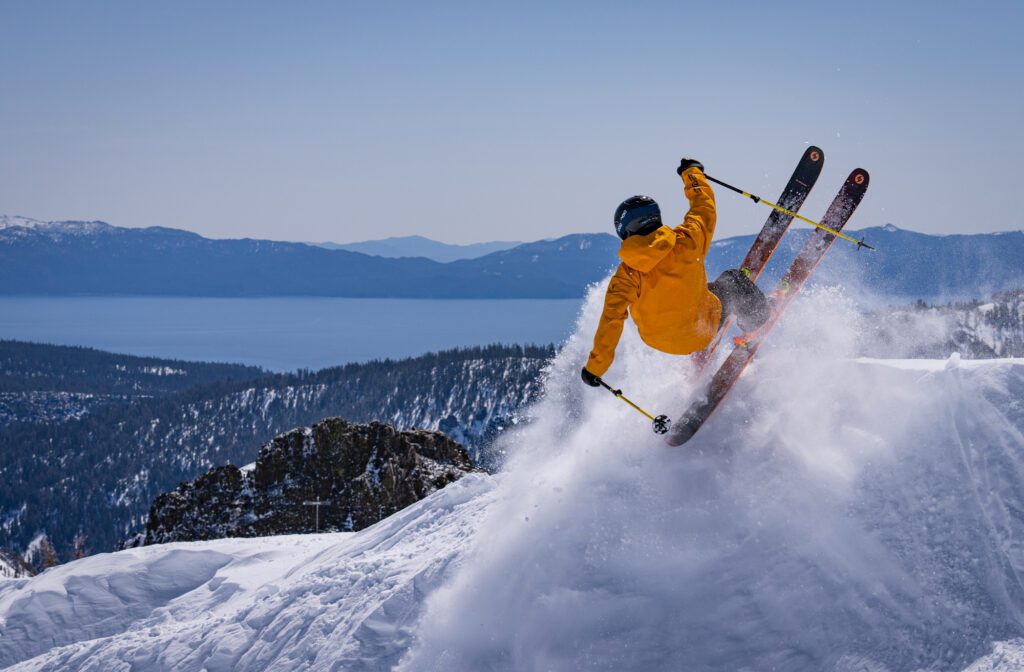
I’m 36 now, so I’m trying to do this for as long as I can and at the highest level possible. Every season feels like a marathon, so a lot of my focus is on staying healthy, strong, and consistent from start to finish.
I’ve been spending more time in the gym, getting stronger, and making the most of the opportunities in front of me. I’ve learned a bunch of new rail tricks that I never had before, which feels pretty cool at 36. It almost feels like the opposite progression of most skiers. A lot of people move from park into big mountain, and I feel like I’ve gone from big mountain back into the park.
Overall, it’s been a lot of fun. It’s a good reminder of why I love skiing in the first place. No matter the conditions, just being on snow and continuing to learn new things keeps me motivated and excited to keep pushing myself each season.
What does your mental prep look like before dropping into something serious? Do you have a routine, or is it more instinctual?
It has definitely changed over the years. The more experience I have gained, the more refined my mental prep has become. A lot of it is intuition, but intuition really just comes from experience built over time.
Visualization plays a big role for me. Whether I am flipping off something at Palisades or skiing a new line in the backcountry, it starts with checking in with myself. I pay attention to how I am feeling that day, whether I am tired, motivated, distracted, or fully present, and I try to understand why I am feeling that way. That self awareness is a big part of the process for me.
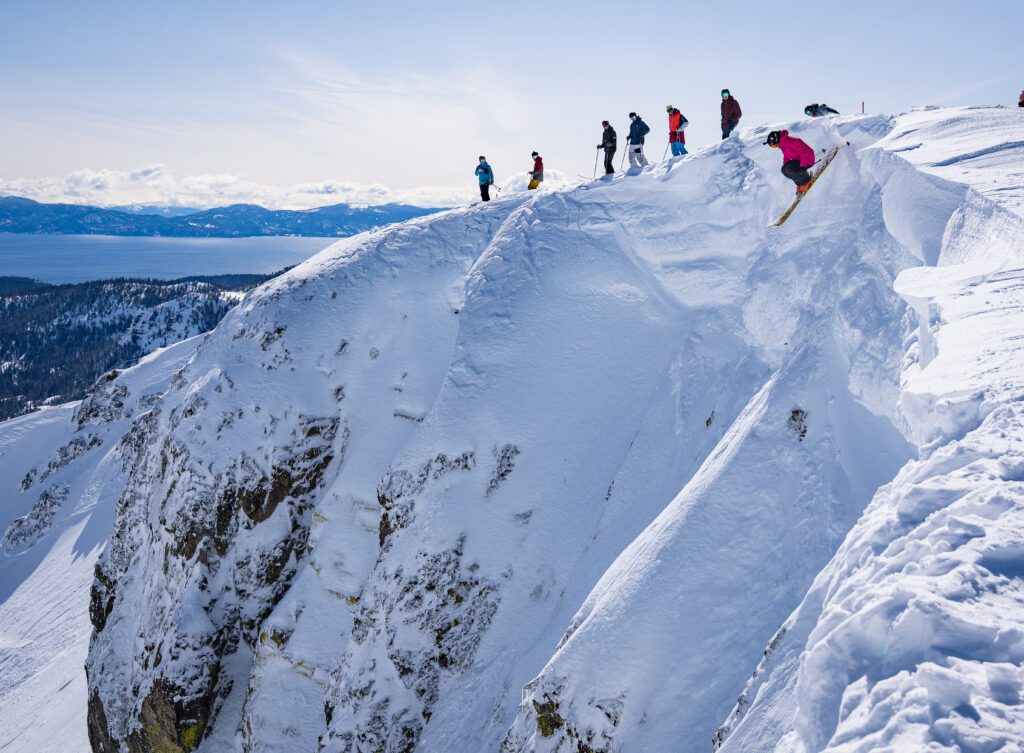
From there, I spend time visualizing both what could go wrong and what could go right, and how to set myself up for the best possible outcome. It is about thinking through the line, the execution, and then committing when it feels right.
That said, it changes every day and with every feature. Some days you are feeling it, and some days you are not. The biggest skill I have learned is knowing when to walk away. Earlier in my career, especially around the crash at Big Sky in 2014, I did not know how to say no. That experience taught me that being able to step back and say, I am good today, is just as important as knowing when to go. If there is one thing I could pass on, that would be it.
You’re known around the mountain as someone who really supports and mentors younger skiers. With the launch of the Pursuit Team, what role do you see yourself playing, and how excited are you to help the next generation find their path in skiing and snowboarding?
When I first started finding my footing in the professional skiing world with sponsorships, contracts, and competitions, JT was a huge part of that process for me. He was essentially my agent, even though he always joked that he was my zero percent agent. Before any of that, he was actually my math tutor when I moved up here for homeschooling in high school. Totally unrelated to skiing at the time, but he somehow became this mentor figure in my life.
When I started competing, I would call him before big events, even the night before finals. He would help me think through strategy, like how much risk to take and how to approach a run. He also walked me through things no one really teaches you, like how to write emails, how the industry works, and how to navigate sponsorship conversations. There really is no roadmap for that side of skiing, and without JT, there is no question that a lot of my professional career would not have happened the way it did.
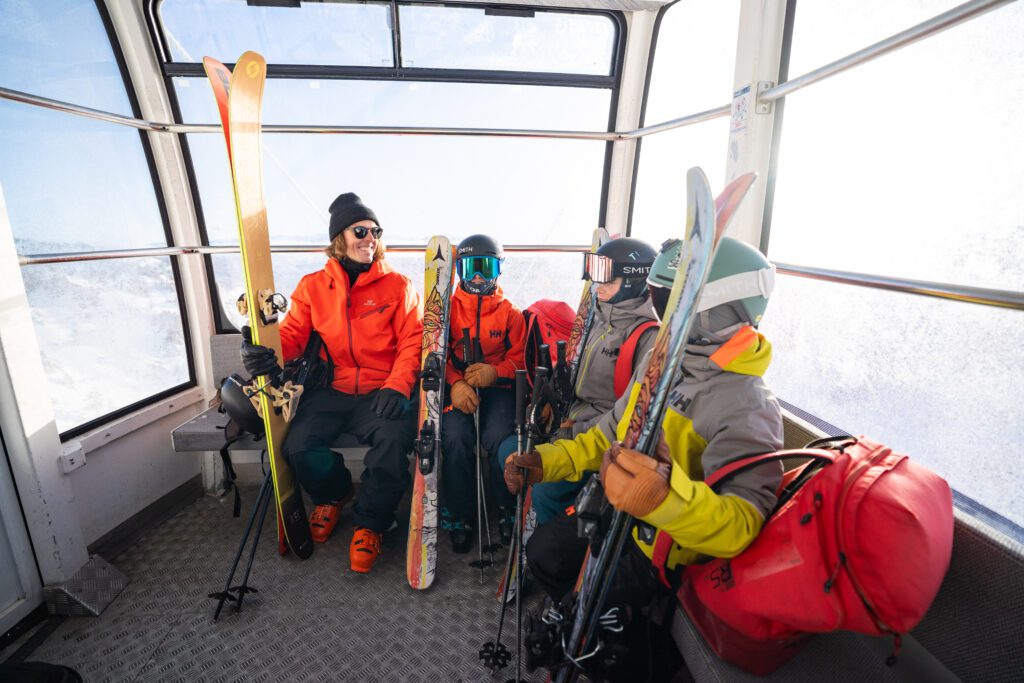
That experience really stuck with me. The ski industry can feel overwhelming and intimidating, especially for younger athletes who might be shy, unsure of themselves, or nervous about putting themselves out there. If I can be that person for someone else, the way JT was for me, then that feels really meaningful. Sometimes all it takes is a small nudge from the right person to help someone take the next step, whether that is trying a new trick or believing they belong in that space.
Selfishly, it also keeps me motivated. Being around younger skiers brings a lot of energy. There are days when I feel a little jaded or tired, and then I see one of the kids go out and send something, and suddenly I am fired up again. It becomes this fun, healthy, friendly push where their stoke feeds mine, and that is something I really enjoy being part of.
You’ve spent the last few years working on the new Blizzard Canvas line of skis. What role did your skiing style play in influencing the design?
This project was really unique because it was truly athlete driven from the start. Usually, as a team rider, you are testing skis that already fit a brand’s vision and giving feedback from there. With this one, we were able to build it from the ground up.
Blizzard came to us asking what we actually wanted to ski. We spent a lot of time communicating shapes, flex patterns, sidecut radiuses, and most importantly, how we wanted the ski to feel on snow. Rather than getting lost in materials or engineering details, they focus stayed on feel and performance.
Over a couple of years and eight different prototype versions, that process eventually became the Canvas. It is still very much a Blizzard ski with that hard charging, Austrian built DNA, but it also has playful, twin tip characteristics that reflect how I like to ski. Being one of the more experienced riders on the team, I was able to help guide that balance.
At the end of the day, the goal was to create something that is fun, confident, and versatile. It was incredibly rewarding to help shape a ski that I genuinely enjoy skiing and that I think a lot of other people will too.
You’ve progressed through your career in a quiet, humble way that reflects who you are as a person. How has your approach to goal setting evolved over the years, and are there any goals you’re currently working toward?
When I first started, I definitely had clear goals. I wanted magazine covers, movie segments, and to win competitions like the Freeskiing World Tour. I feel incredibly lucky to say that I actually accomplished everything I set out to do. From competition wins to magazine covers and filming with TGR, Warren Miller, and Matchstick, it really was the full dream.
A few years ago, that realization hit me all at once. I started to see that skiing isn’t meant to be a checklist. Goals are important, but I also felt grateful that I had already achieved what I once worked so hard toward. Since then, my relationship with the sport has shifted. I’ve been trying to come back to skiing purely for the love of it, and to make sure I’m not doing it for the wrong reasons.
When your passion becomes your job, things can get complicated. I’m not asking for sympathy, but it can be tough to navigate when sponsors, expectations, and personal fulfillment all overlap. I’ve definitely struggled with that. At this stage, I don’t really have big outcome-based goals. That doesn’t mean I’ve given up. I’m training harder than ever, I feel stronger than ever, and I honestly think I’m skiing better than ever.
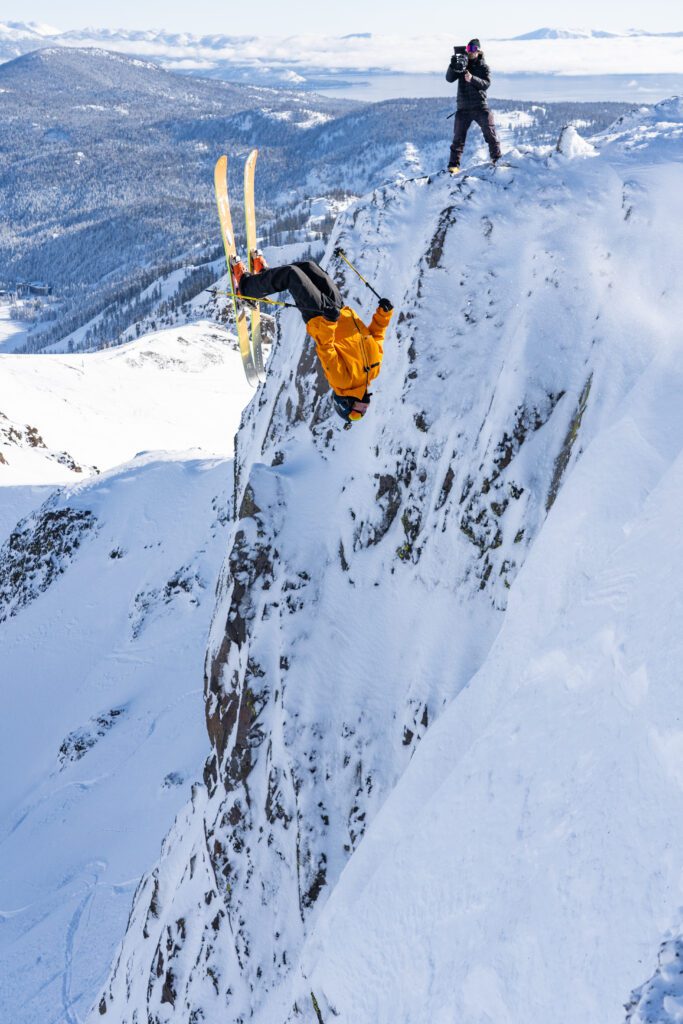
The difference now is my focus on being present and actually enjoying it. Earlier in my career, I was more stressed and less able to fully appreciate what I was doing. Now I’m trying to find that balance between doing my job, staying true to myself, and remembering why I fell in love with skiing in the first place. I’m still figuring that out.
One perspective I really admire is what Shane embodied. He was a world-class skier, but he took the seriousness out of it and kept things playful. You see that same mindset with people like Cody and JT. It’s a reminder that, at the end of the day, we’re still just playing in the snow. That’s a perspective I value deeply and try to carry with me.
What was it like being featured in a Super Bowl commercial, and how did that experience compare to other projects you’ve worked on?
Yeah, that was pretty wild. I’ve actually shot two ads with them. The first one was supposed to air during the Super Bowl, but it ended up getting pulled the day of. I remember being completely devastated because I had already told everyone it was happening, and then it didn’t.
Last year, though, we finally did have a Super Bowl spot, and that experience was incredibly cool. Being part of a full Hollywood-level production was something else. Kate Abraham played a huge role in making it all happen and getting us the access we needed, which I really appreciated. I actually enjoy the logistical side of those projects a lot, figuring out how all the pieces come together.
We’re working on another Toyota ad now, and it’s just really fun to help create those moments, build the action, and then see it all come to life on such a massive screen. Seeing skiing and Palisades represented in front of a Super Bowl audience is a huge honor.
I feel really lucky to be part of the Palisades team. The roster is pretty unreal, and none of this would be possible without Palisades Tahoe and everyone behind the scenes doing the work and making those connections. I’m very grateful for that.
What sets Connery apart isn’t just his resume, though it’s undeniably stacked. It’s his generosity. The way he lights up when talking about skiing with friends. The time he spends mentoring young athletes, passing down the knowledge and passion that was passed to him.
As he prepares to represent Tahoe at the Natural Selection Ski Super Session this winter, Connery carries with him more than just skill and experience. He carries the spirit of Palisades Tahoe. The place that taught him to ski fast, go big, and never stop smiling. And when he drops in on the NST course, surrounded by the peaks that raised him, it won’t just be another competition.
To read more stories about our Professional Athlete Team check out our other Athlete Spotlight blogs.