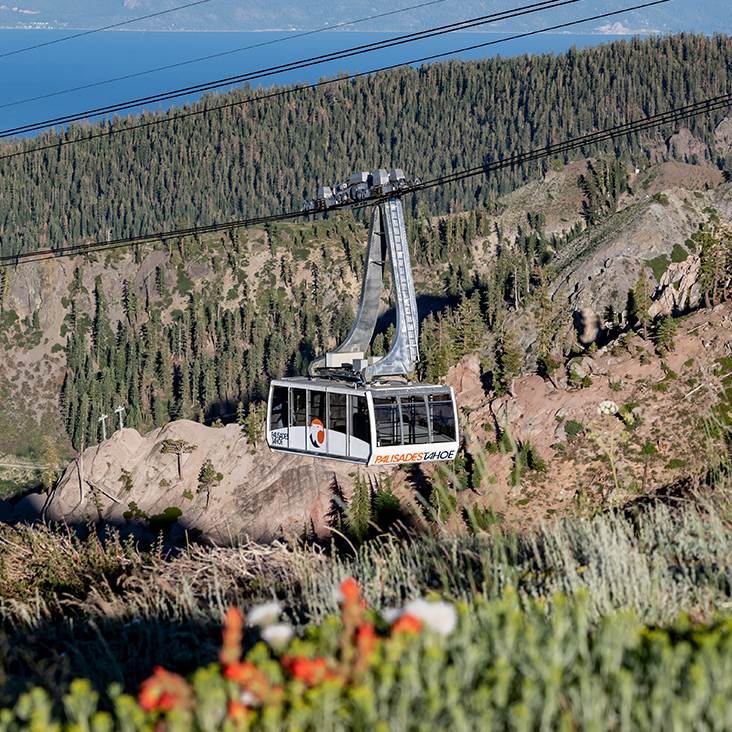
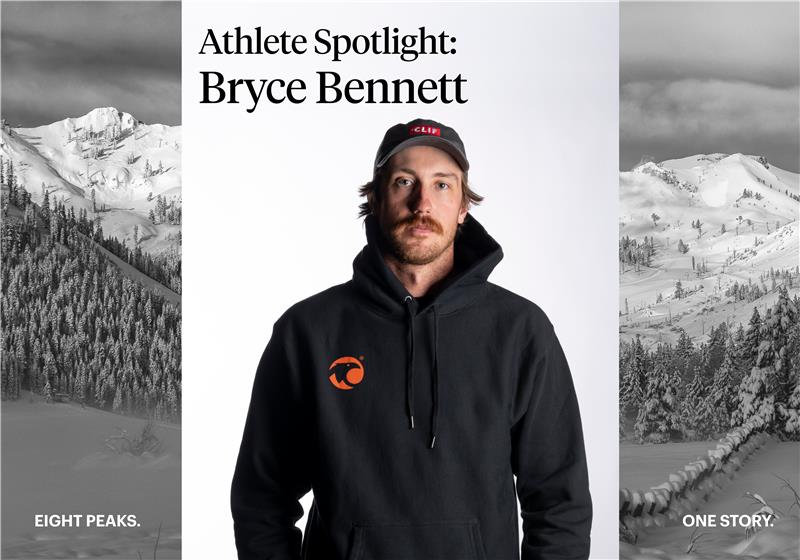
Bryce Bennett’s journey to becoming one of the fastest downhill skiers in the world began on the slopes of Palisades Tahoe, where he first clicked into skis at just two years old. Growing up in Alpine, Bryce learned to navigate the resort’s steep, demanding terrain, the perfect training ground for a future World Cup champion. At 6’7”, he’s a commanding presence on the course, known for an aggressive, no-holds-barred style that thrives on speed and precision.
From his early days on the Stifel U.S. Alpine Ski Team to the grit it took to break into the World Cup’s elite ranks, Bryce has built a career on perseverance, self-reliance, and a drive to race on his own terms. In 2021, he claimed his first World Cup win on the legendary Val Gardena downhill in Italy, a feat he repeated in 2023, punctuating his best season yet with multiple podiums and a fifth-place world ranking in downhill.
Off the hill, Bryce is as grounded as he is fast, spending his downtime fishing, biking, and exploring the Sierra backcountry. But on race day, he’s all focus, chasing hundredths of a second on the most demanding courses in the world. With the next chapter of his career approaching, we sat down with Bryce to talk about his journey, his mindset, and how his roots at Palisades Tahoe shaped the skier and person he is today.
What is it about Palisades Tahoe that puts you on this path to compete at the highest level in your sport? How does Palisades Tahoe’s culture shape high level athletes?
I think, in general, just growing up in Tahoe and skiing here at Palisades Tahoe shaped a lot of who I am. I’ve said this before in another interview: the community here takes everything super seriously, maybe even too seriously at times. And it’s not just skiing. Whether it’s snowboarding, wakeboarding, mountain biking, dirt biking, rock climbing, or anything else, there’s always someone in Tahoe who takes it to the next level, probably further than it’s ever been taken before.
That culture is just ingrained in our community. I don’t think it’s a bad thing at all. I actually think it’s really rad. Growing up here, most people in the community ski or snowboard. In the winter, what else are you going to do? You either shovel or ski, and we were going skiing.
There was such a high level of skiing around me all the time, and that environment pushed you. You’d see someone hit a cliff or take a challenging line and think, “If they can do it, I can do it.” That constant push from the community was huge for me. I didn’t really think about it at the time, and I probably took it for granted, but looking back, it was a massive influence on me.
Do you think there is more of that culture of pushing the sport here at Palisades Tahoe?
Oh yeah. Another big part of it was the ski team here at Palisades. It’s huge, with so many kids involved, which is great because everyone finds their own little group. Those groups of kids grow up together from a young age and become really close friends. Most of my friendships came from the ski team.
We were always pushing each other, both on and off the hill. You’d hang out skiing during the day, then hang out again after, and it all just built into this lifestyle where you never really knew how far it could go. For me, it turned into my entire life, competing in ski racing at the highest level.
The group I grew up with all took it to a high level in their own ways. Some went on to Division One skiing in college, others made the U.S. Ski Team, and everyone turned out to be incredibly good people off the hill as well. I feel incredibly blessed to have had that kind of upbringing.
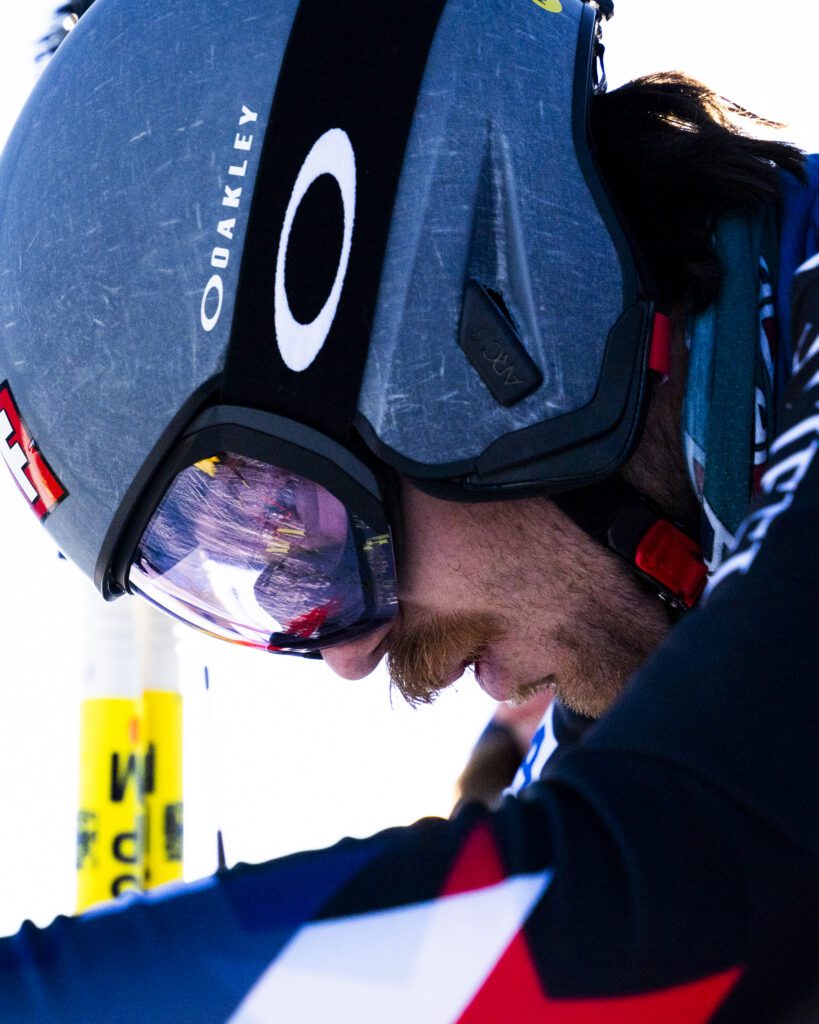
How do you think growing up freeskiing at Palisades Tahoe has impacted your ski racing career?
I think growing up here, there were times where we free skied more than we trained. I remember one huge year in 2010 when it snowed every single day. I spent two weeks straight in line at KT at 6:00 in the morning and skied from bell to bell without training a single day.
That kind of upbringing gave me a different set of skills. Learning to translate those skills into racing has helped me a lot, even though it’s a different style of skiing. In certain situations, I feel like I have an advantage over others because they might not have that same touch or feel for the snow.
You can’t really teach someone to sense where the speed is, where the fall line is, or how to create speed out of nothing. That comes from skiing and free skiing. There are aspects of free skiing that have given me a leg up, but there are also areas where I’ve had to work harder. The great thing is that you can develop both skill sets.
Recently, Unofficial Networks names Palisades Tahoe the ski area that produces the best skiers. Is this something you believe in?
Yeah, I definitely believe it. If you’re talking about producing the best all-around, average skier, Palisades stands out to me.
A lot of people will say the best skiing is somewhere else, and that the best skiers come from back east. But at the same time, most of those people end up coming west eventually, and there’s usually a reason for that.
What makes it special is how people grow up skiing here. You’re free skiing all the time, exploring terrain, figuring things out on your own, and skiing in a lot of different conditions. That creates skiers who are adaptable, creative, and confident across the whole mountain, not just in one discipline.
People come here for a reason. The terrain pushes you, the culture encourages progression, and you end up with skiers who can handle just about anything. That combination is what, in my mind, produces really strong, well-rounded skiers.
Are there any athletes, coaches or mentors who stand out in your ski career?
I had one coach growing up named Konrad Rickenbach. He probably saved my life because I could have gone in any direction. By the end of high school, I was pretty wild, but he was able to narrow my focus and teach me important mental toughness skills. He helped me develop the mental side of not only my skiing, but also my life.
He still emails me to this day with thoughts and advice. There were so many coaches who helped me over the years, and I’m grateful for all of them, but Konrad was the one who truly changed my life.
Keely Cashman and AJ Hurt have both mentioned that you were one of the athletes they looked up to while coming up in the sport. What’s it been like watching them take the next steps in their own careers?
It’s really cool. We grew up in a similar way, so I can relate to their upbringing and how they view skiing. I’ve always tried to support them as much as I can.
They’re both going to be successful. Sometimes it just takes time to figure out your path, especially growing up here. It’s a pretty loose environment. You’re free skiing all the time, having fun, and then eventually you translate that into racing.
Honestly, if Keely won a World Cup, I’d probably be more psyched for her than if I won one myself. Same with AJ. It’s just really cool to see.
Last season you got your second win at Val Gardena. What is it about that course that works for you?
I’ve won there twice now and been on the podium another time. That downhill is intense. You leave the ground over 20 times, and one of the jumps is huge, like 30 or 40 meters, and you’re hitting it at about 75 miles per hour. It’s just a really fun downhill.
It actually reminds me a lot of free skiing back home, working with the terrain and big jumps, trying to create speed off each feature. That style fits my skiing perfectly and suits my skill set better than a more robotic approach.
Is there anything that surprised you about the culture at major international competitions?
In the athlete areas, you have your normal food court, but in the village there are also fast-food spots like McDonald’s and KFC. The amount of people absolutely hammering fast food was wild to me.
I remember standing there thinking, “Really?” But at the same time, when you’re traveling and racing a lot, sometimes familiar food is what gets you through.
As you look ahead to the next major competition cycle, is there anything you’re doing differently to prepare mentally or physically?
To me, those major events are just another race that happens every few years, so I try not to put extra emphasis on them. My focus is on the World Cup season and racing these classic downhill tracks.
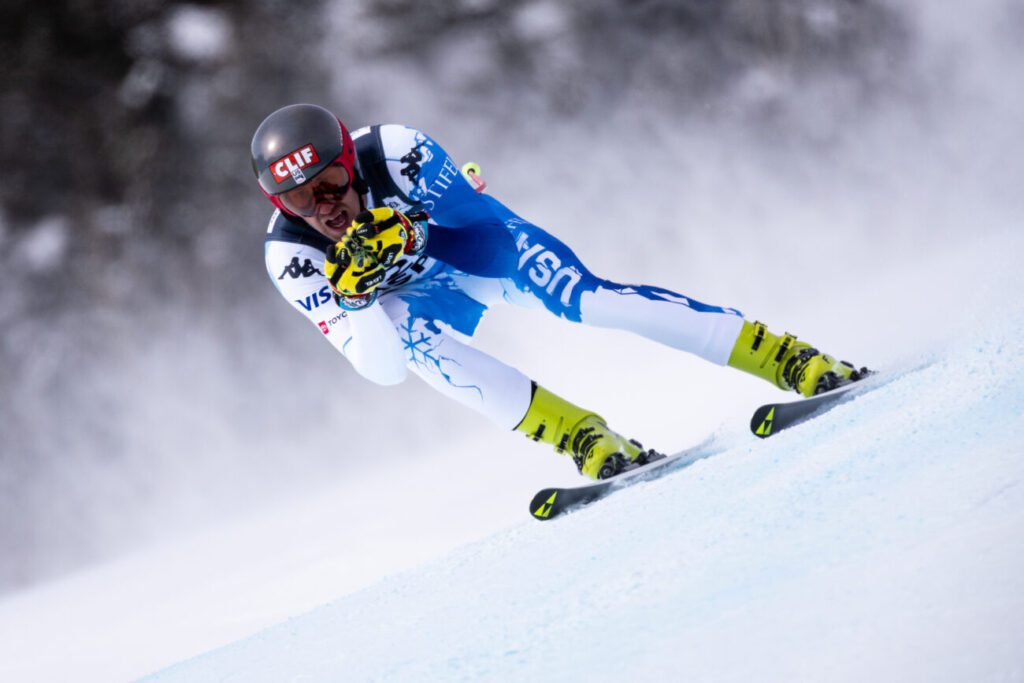
I want to win World Cups, and if I can do that, it puts me in a great position going into any big event feeling confident and ready to perform. The real emphasis for me is on building confidence in my skiing. This summer, I’ll be training and working to find that confidence, then building on it so when the season comes around, I can be successful.
What are your thoughts about Spring Skiing at Palisades Tahoe.
I actually think spring skiing is better than powder skiing. With powder, you’re excited about face shots and fresh snow, which is great. But with spring skiing, you can just lay down arcs on anything, moguls or smooth runs, and you’re not freezing.
You’ve got a flannel on, the conditions are creamy and soft, and you’re just out there enjoying it. That’s what I really love about spring skiing.
Do you know on average how many days you ski a year?
I’ve tried to do the math, and it’s funny because everyone’s always trying to break 100 days. By the time I come home at the end of December, people are like, “Let’s go skiing!” and I’m like, “Dude, I’m almost over 100.”
Before, I felt like I had to do it no matter what, even if the conditions were rough. Now I’d say I probably ski somewhere between 170 and 190 days a year.
Do you have any advice for younger athletes aspiring to compete at this level?
My advice would be to take ownership of your career. No one is going to do it for you. At some point, you have to own every aspect of what you’re doing.
It took me a long time to figure that out. I used to think that if I just did the work and followed everyone’s instructions, success would automatically come, but that’s not the case. You have to understand why you’re doing things and what the purpose of each step is. Coaches can guide you, but ultimately, you’re responsible for your own path.
We saw that you recently had a new baby girl. What about parenthood are you looking forward to most?
What I’m most looking forward to is eventually seeing her crawl and then walk. I’m really enjoying these moments as they come. I’m especially excited to be a parent here in Tahoe, sharing skiing, mountain biking, and all these outdoor activities with her.
From free skiing powder days at Palisades Tahoe to standing atop the World Cup podium, Bryce Bennett’s story is proof of what happens when talent meets grit and a supportive mountain community. As he looks ahead to more World Cup victories and the biggest races in the sport, Bryce continues to carry the lessons, friendships, and fierce spirit shaped in Tahoe, inspiring the next generation to push their limits and chase big mountain dreams.
| Palisades Tahoe Pro Athlete Blog Series |
| • Jonny Moseley |
| • JT Holmes |
| • Amie Engerbretson |
| • Connery Lundin |
| • Bryce Bennett |
| • AJ Hurt |
| • Michelle Parker |